The tailor-made tour is one of the most consistently misunderstood products in travel. The brochure version sounds like a private trip with a personal planner who handles everything. The reality runs from genuinely excellent to barely-distinguishable-from-a-package, depending on the operator. The price runs from sensible to absurd, depending on the same. And the question of whether you need one at all depends almost entirely on where you are going and what you are willing to figure out yourself.
This guide is the unvarnished version. Below: what a tailor-made tour actually is, the three things you are actually paying for, the destinations and trip-types where it earns its place, the ones where you should book it yourself and save thirty to fifty percent, the cost reality, the questions to ask before booking, and how to tell a good planner from a bad one.

In This Article
- What a tailor-made tour actually is
- The three things you are actually paying for
- When tailor-made is worth it
- When tailor-made is not worth it
- The cost reality
- How to choose a planner
- Questions to ask before booking
- Common mistakes
- The decision hierarchy: what to use when
- The middle ground that most people miss
- Red flags worth recognising
- What you should do before the first call
- The verdict
What a tailor-made tour actually is
A tailor-made tour, sometimes called a bespoke tour or tailored travel, is a private trip planned by a specialist for one party (one or two travellers, a family, sometimes a small group). It sits between a packaged group tour (cheap, fixed dates, fixed itinerary, shared with strangers) and a fully DIY trip (cheapest, most flexible, you do all the planning).
The defining elements:
- An itinerary built specifically around your dates, interests, fitness level, and travel style
- A planner (a real human) who consults with you before booking and during the trip
- Hotels, flights, transfers, and tours all booked in advance through the operator’s commercial relationships
- Local representatives or guides at each destination, available if needed
- A 24-hour emergency support line during travel
The defining absences:
- You do not share the trip with strangers (it is private)
- You do not follow a coach group’s schedule (you set the pace)
- You are not stuck with the operator’s pre-built itinerary if you want to change it
The product is most popular in the UK, Australia, and parts of continental Europe; less so in the US where the equivalent is usually called “custom travel” or “private guided travel”. The leading operators in the UK include Audley Travel, Wendy Wu Tours, Cox & Kings, Travel Nation, and Original Travel; in the US, brands like Black Tomato and Brown & Hudson play in similar territory.
The three things you are actually paying for
A tailor-made tour costs more than booking the same flights, hotels, and tours yourself. The premium is somewhere between fifteen and forty percent depending on the operator. What you get for that money breaks down into three things:
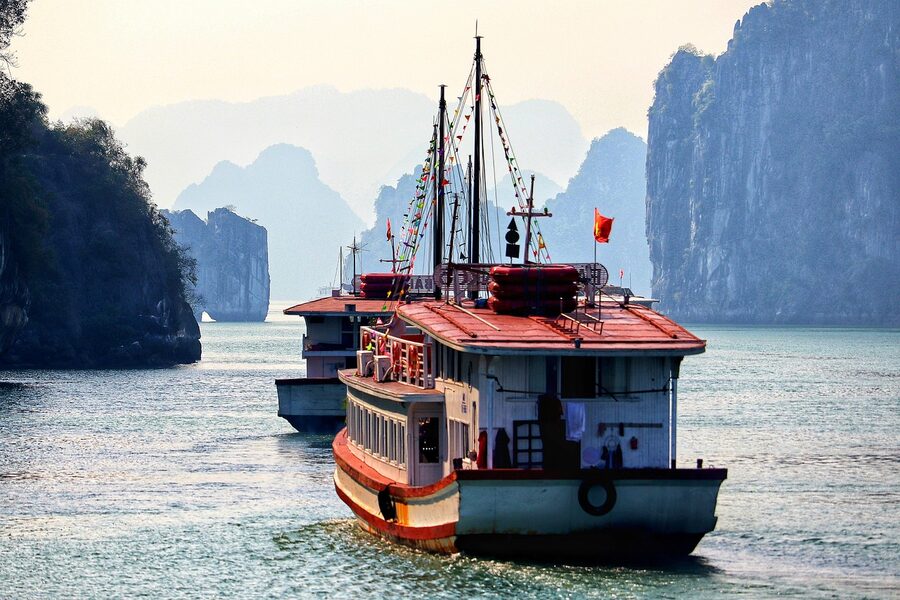
Knowledge. A good planner has been to the destinations they sell, has visited the hotels they recommend, knows which guide in Cairo speaks fluent English versus the one who claims to, knows which boat operator in Halong Bay is reliable in February versus December, and can tell you that the road north of Salta is closed for three weeks in March. This knowledge is real and worth real money for destinations where it is hard to come by independently.
Coordination. Multi-country trips, internal flights with tight connections, transfers between five different cities, a cooking class in Marrakech that has to fit between a desert tour and a flight to Casablanca: all of this can be done DIY but it takes time and there is real friction in handling it from your home country. A planner does it in a single thread of conversation with their on-the-ground partners.
Risk transfer. If your flight is cancelled, if a hotel overbooks, if a guide does not show up, if a country closes its border, the operator deals with it on your behalf. They have the relationships and the on-the-ground rep network to fix things in real time. This is the most under-appreciated value of the tailor-made model and the most useful version of it for travellers with limited flexibility.
For destinations where the planner’s knowledge is genuinely scarce and the coordination is genuinely complex, the premium pays for itself. For destinations where the information is freely available online, the hotels are easy to book on Booking.com, and the transfers are well-marked at the airport, the premium pays for someone else’s overhead.

When tailor-made is worth it
The destinations and trip-types where the value genuinely shows up:
Patagonia. Argentina and Chile. The flights from your country to Buenos Aires, then the internal flight to Calafate, then the bus to El Chalten, then the cross-border bus to Puerto Natales, then the W trek booking: the logistics are demanding even for experienced travellers. The weather complicates everything (your hotel night might need to shift if your hike day shifts because of cloud). The relationship a planner has with hotels in El Chalten and refugios in Torres del Paine is hard to replicate from outside the country. If you are doing both sides of the border with the W and the Fitz Roy in one trip, a tailor-made operator earns the premium. The full breakdown for the Fitz Roy trek shows where the planner can save you days of admin.
Iceland. The country’s logistics (rental cars, F-road permits in summer, weather windows for highland routes, road closures in winter) are more demanding than most other European destinations. A planner with Reykjavik relationships gets you the right hotels at high-season rates, the right rental car upgrade, and an emergency contact when the road conditions change overnight. Reykjavik itself is easy to do DIY but the country around it benefits from a planner.
East African safaris. Tanzania, Kenya, Botswana, Zambia. Multi-camp safaris involve internal flights on small aircraft (sometimes seasonal), connected to lodge stays where the lodge handles everything once you arrive. The booking and routing is the work; the experience on the ground is mostly the lodge’s job. Tailor-made operators have decades-long relationships with the better camps and frequently get rooms that DIY booking cannot find on the public sites.
Multi-country trips with tight connections. Three weeks in Southeast Asia covering Cambodia, Vietnam, Laos, and Thailand with internal flights, multiple visas, and overland border crossings is a planning project. A planner pulls it together in one thread. Single-country versions (just Vietnam, just Thailand) are easier and the value of a planner is lower.
Honeymoons and milestone trips. Where the cost of a small thing going wrong is high in non-monetary terms. Anniversary trips, big-birthday trips, the family-of-six gathering after twenty years apart. The risk transfer is worth more than usual and the planner’s emergency contact is worth its weight.
Trips with logistical complexity above your tolerance. If you are time-constrained, work full-time, do not enjoy planning, have specific dietary or accessibility needs, are travelling with elderly parents or young children, or have any combination of the above, a tailor-made operator removes the planning burden from the trip.


When tailor-made is not worth it
The destinations and trip-types where DIY beats it cleanly:
Western Europe. The UK, France, Italy, Spain, Germany, the Netherlands. Information density is enormous, hotels are on Booking.com, trains are on Trainline or the operator sites, restaurants reservations are on OpenTable or directly through the restaurant’s site. A tailor-made trip to Italy in 2026 is paying premium prices for things you can book yourself in twenty minutes. The exceptions are at the high end (private villas, opera-based itineraries, guided art tours), where specialists do add value.
Southeast Asia overland. Vietnam, Thailand, Cambodia, Laos, Malaysia. The travel industry has been catering to backpackers and independent travellers for decades and the infrastructure (12Go for buses, Booking.com for hotels, EasyBook for the Thai-Malay border crossing) is mature and easy. Single-country trips are easy DIY. The exceptions are luxury-end resorts and remote Mekong cruises, where the operator’s relationships are real.
Most of the Yucatan and the Caribbean. If you are doing Chichen Itza from Cancun, you do not need a tailor-made operator; you need a Cancun-based ground operator who runs daily tours, and you can book them on the day at any hotel reception. Similarly for the larger Caribbean islands; the resort handles everything once you land, and Booking.com or Expedia gets you there.
Big-city short breaks. A long weekend in New York, Tokyo, or Sydney is too short and too information-rich to need a planner. Hotels are bookable, restaurants take reservations directly, and the city’s metro takes you everywhere.
Single-country two-week trips by experienced travellers. If you have done independent travel before and the destination is one of the well-trodden ones, you will get a meaningfully better trip planning it yourself. The reason is that you control the small decisions in real time on the ground, and the small decisions are where most of the trip happens.




The cost reality
Tailor-made operators rarely publish prices. The reason is that prices vary wildly by season, dates, and which hotel category you choose; they also vary because the operator does not want to be price-compared on a search engine. Rough guidance for a couple, all-in (flights, hotels, transfers, tours, guides):
| Trip type | Tailor-made (per couple) | Equivalent DIY (per couple) |
|---|---|---|
| Two weeks in Italy, mid-range | $6,500-9,500 | $4,500-6,500 |
| Three weeks in SE Asia, mid-range | $8,000-12,000 | $5,500-8,000 |
| Ten days in Iceland, mid-range | $8,000-13,000 | $6,000-9,000 |
| Two weeks in Patagonia (both sides), mid-range | $9,000-14,000 | $6,500-9,500 |
| Ten days East African safari, mid-range | $15,000-25,000 | $10,000-16,000 (DIY very hard) |
Premium of around twenty-five to forty percent is the typical pattern. The smaller premiums tend to be for less-complex destinations (Italy); the larger ones tend to be for safari-style trips where the operator’s relationship discounts on the lodges genuinely return some of the cost. Expect to spend 25-40% above DIY for the median tailor-made trip.
What is not in those numbers: the value of your time, which most travellers underestimate. A two-week Italy trip planned DIY takes around fifteen to twenty hours of research and booking, spread across a few weeks. If your hourly rate is non-trivial, the math on a planner’s premium changes.


How to choose a planner
The hierarchy of operators, from best to most-likely-disappointing:
Specialist regional operators. Companies that focus on a single region (Patagonia, Iceland, Japan, sub-Saharan Africa) often have the deepest knowledge and the most useful relationships. Andean Trails and Swoop Patagonia are the two long-standing UK Patagonia specialists, both worth talking to. Iceland Travel and Discover the World do Iceland. Inside Japan Tours does Japan. Wild Frontiers and Wilderness Travel do harder-to-reach destinations. The trade-off: they only sell the regions they specialise in.
Mid-size full-service operators. Audley Travel and Wendy Wu Tours in the UK, Black Tomato and Brown & Hudson at the higher end. Cover most regions, have real planners with real travel experience, work at moderate price premiums. The middle of the market is where most travellers end up; the experience is consistent and the risk-of-disappointment is low.
Big-brand luxury operators. Cox & Kings (long-established), Original Travel, Abercrombie & Kent at the very top end. Premium pricing, premium positioning, sometimes premium experience. Best for travellers whose calendar is more constrained than their budget.
Online-first marketplaces. Companies like Kimkim, Rough Guides Tailor-Made (white-label, varies by region), and TourRadar’s tailor-made section. Lower premiums, less hand-holding, planners are local-country-based rather than UK-based. Mixed reviews; some great experiences, some that feel close to packaged.
Travel agents and high-street operators. The traditional UK high-street travel agent has largely shifted away from tailor-made. The ones that still do it are sometimes excellent (older boutique agencies with strong consortium relationships) and sometimes the worst version of the model. Reviews matter; ask for specific case studies on trips like yours.


Questions to ask before booking
The conversation that separates a good planner from a sales channel is usually conducted in the first phone call. Specific questions worth asking:
“Have you been there?” Specifically, in the last two years. Ask about the hotels they are recommending. A planner who has stayed at the property versus one who is selling it from a brochure is a meaningfully different conversation.
“What is your contingency plan if the flight is cancelled or the road closes?” A real answer involves a 24-hour line, named on-the-ground reps, and a specific protocol. A vague answer means the contingency is “you call us and we figure it out”, which is fine for low-risk destinations but worse for the harder ones.
“What does my hotel selection say about my trip?” The planner should explain why they are recommending the specific hotels. If the answer is “they are nice”, the operator is doing minimum-viable. If the answer involves location, character, ownership history, and how the hotel matches the rest of the trip, the operator is doing the job properly.
“What do you not include that I should book myself?” The good planners tell you what to skip from their list and DIY. This is a high-trust answer because it costs them money. Operators who do not have one are either selling everything regardless or do not know.
“What is your discount for [a small thing]?” Try negotiating something. Premium upgrades, room categories, a private guide. Tailor-made operators almost always have margin to play with on something. Operators who refuse to negotiate at all are tighter than they should be.
“Can I speak to a previous client?” Most reputable operators will happily put you in touch with one. The conversation is usually more useful than the operator’s own materials.
Common mistakes
Going tailor-made for an easy destination. A two-week Italy trip does not need a planner. You will pay thirty percent more for a worse trip, because you will be on the operator’s hotels and the operator’s pacing rather than your own.
Going DIY for a hard one. An East African safari with three internal flights and four lodges is not the place to learn DIY. The cost of a small thing going wrong is high.
Believing the brochure on a regional specialist. Big regional operators sell their products consistently across destinations they know well and destinations they know less well. Audley does Italy and Tanzania equally confidently in their marketing; in practice the depth varies. Ask which destinations they consider their strongest and which they sell because clients ask for them.
Not pushing back on the itinerary. Tailor-made should mean tailor-made. If the first draft of the itinerary looks like the brochure, ask for changes. If they push back hard on the changes, they are not tailor-made; they are packaged with a wrapper.
Not booking insurance separately. Most tailor-made operators offer travel insurance through their commercial partners. The rates are sometimes good, sometimes mediocre. Compare with True Traveller, Insure & Go, World Nomads, or your home country’s options before accepting the operator’s policy.
Over-trusting the cancellation policy. Read it carefully. A few operators have generous policies; many have policies that lock you in heavily after the deposit. Your travel insurance should cover the standard cancellation reasons, but the timing of when the operator’s policy kicks in versus the insurance is the detail to check.

The decision hierarchy: what to use when
| Trip | Best option |
|---|---|
| Long weekend in Western Europe | DIY |
| Two weeks in one Western European country | DIY |
| Single-country trip in mature SE Asia (Vietnam, Thailand) | DIY |
| Multi-country SE Asia overland with internal flights | Tailor-made earns its premium |
| Iceland self-drive ring road | DIY (with one specialist for any F-road / glacier add-ons) |
| Iceland multi-week with highlands and remote regions | Tailor-made |
| Patagonia one-side trip (Argentina or Chile, single park) | DIY (for fit independent travellers) or tailor-made (for time-constrained) |
| Patagonia both sides with the W and Fitz Roy | Tailor-made |
| East African safari | Tailor-made (DIY is genuinely hard) |
| Galapagos cruise | Tailor-made (for the boat selection) |
| Big-city short break (Tokyo, NY, Sydney) | DIY |
| Honeymoon | Tailor-made (for risk transfer + small luxuries) |
| Yucatan / Cancun | DIY (with day-tour operators booked on arrival) |
| India (Rajasthan circuit) | Tailor-made or knowledgeable DIY |
| India (Kerala backwaters) | DIY |
| Morocco (multi-region) | Tailor-made or knowledgeable DIY |
| Cuba | Tailor-made (for the visa and currency complications) |

The middle ground that most people miss
The two extremes (full tailor-made and full DIY) are not the only options. Three middle-ground products are worth knowing about:
Local ground operators. A specialist tour operator based in the destination country (rather than your home country). Often half the price of a UK or US tailor-made operator, often with deeper local knowledge, often with the same on-the-ground network. The trade-off is that you are dealing with a foreign company under foreign consumer law, and the language can be a barrier. The operators that work in English are usually the better-known ones; ask for personal recommendations rather than relying on TripAdvisor.
Tailor-made for the hard parts only. Use a planner for the difficult two days (the safari, the multi-flight Patagonia leg, the cross-border Mekong cruise) and DIY the rest. Most operators will sell a partial trip and the savings are significant.
Single-day private guides booked locally. For a city trip or a single complex day at a major site, a half-day private guide hired through Withlocals, Tours by Locals, or recommended by your hotel is around 80-150 US dollars and adds enormous value to a single day without committing to a fortnight of paid planning. The morning at Chichen Itza with a certified guide is one example; the dawn light at the Taj Mahal with a Hindi-speaking driver is another.
Mixing these together (DIY for the easy half, local ground operator for the medium days, single-day guide for the headline experiences) often gives a better trip at less cost than full tailor-made. The trade is that you do the orchestration yourself, which is moderate work but not difficult work.

Red flags worth recognising
If you are talking to an operator and one of these comes up, the conversation is the wrong one:
The brochure-only response. If the planner cannot answer detail questions about a specific hotel, restaurant, or guide and instead refers you to the company website, you are talking to a sales channel rather than a travel specialist. The good operators put you in touch with someone who has actually been to your destination.
Pressure to deposit fast. “We can hold this rate for forty-eight hours” is an old sales tactic and largely fictitious. Real availability problems happen during specific peak weeks and even then the operator is rarely losing the rate in two days. If a planner pushes you hard on a deposit deadline, they are probably under sales-target pressure, not actual booking pressure.
Vague pricing. Tailor-made operators do not publish list prices but a real quote should arrive in writing within two to five business days, with itemised costs by component (flights, hotels, transfers, guides, fees). A single all-in number with no breakdown is harder to compare and harder to negotiate.
The same trip everybody else gets. If you take a friend’s tailor-made trip itinerary from the same operator and yours looks identical to theirs (same hotels, same days, same restaurants), the operator is doing packaged-with-a-wrapper. Real tailor-made should diverge meaningfully based on your stated preferences.
No on-the-ground rep. The operator’s value when something goes wrong is the local rep network. If the planner cannot tell you who you would call if your hotel cancels at midnight in Cusco, the network is not real.

What you should do before the first call
Three things to nail down before you contact a tailor-made operator. They turn the first call from a sales conversation into a productive briefing.
Know your dates within a week or two. “Sometime in March or April” is much harder to plan around than “March 14 to 28”. The narrower your window, the better the planner can hold a hotel and the cleaner the quote.
Know your budget within twenty percent. If you are unwilling to share, the planner has to guess at what category to recommend. Even a rough range (“around 8,000 USD per couple, give or take a couple of thousand”) gives them what they need to suggest the right hotels and the right pace.
Know your dealbreakers. Not “things you want” but “things you will not tolerate”. Long internal flights with multiple connections. Hotel-room sizes below 25 square metres. Strong meal heat. Early starts. Walking distances above 8km a day. The dealbreakers shape the trip more than the wishlist does, because the planner is matching products to a real person rather than a brochure target.




The verdict
Tailor-made tours earn their place in travel for the destinations and trip-shapes where the planner’s knowledge is genuinely scarce, the coordination is genuinely complex, or the risk transfer matters more than usual. They do not earn their place for trips where the information is freely available and the bookings are easy. The trick is being clear with yourself about which category your next trip falls into. The trip you would pay a fortune to have someone else handle is rarely the same trip as the one where you would secretly enjoy doing the planning yourself.
The planning is, often, half the fun. The trips I remember most are the ones I planned myself; the trips I would not have managed are the ones a planner saved. Both have their place. The question is which one your next destination is, and whether the calendar logic of when to travel is the deciding factor that pushes you toward letting someone else handle the dates.