The first time I walked up to Laguna de los Tres I started at four in the morning in the dark. The second time I started at nine in the bright light and missed the alpenglow on the summit by ninety minutes. The mountain looks magnificent at any hour, but the version of Fitz Roy that the photographers come for, with the granite spires turning pink against the dawn, is a one-hour window that closes hard. Pick the right hour and you get the trip you came for. Pick the wrong one and you get a beautiful walk that almost everybody on it wishes they had started in the dark.
This guide is the practical version. Below: the trek itself, the final hour that everybody underestimates, the multi-day option that makes the dawn light reachable without a four-thirty start in town, the alternative routes worth knowing about, and the small set of mistakes that turn a great Patagonia day into a hard one.

In This Article
- The trek in brief
- Where this is on the map
- El Chalten as base
- The Laguna de los Tres trail, hour by hour
- The dawn version, and why it changes the trip
- Alternative routes worth knowing
- When to come
- How to get to El Chalten
- Money, food, water
- What to take
- Common mistakes
- What it adds up to in costs
- If you would rather have it planned
- The view
The trek in brief
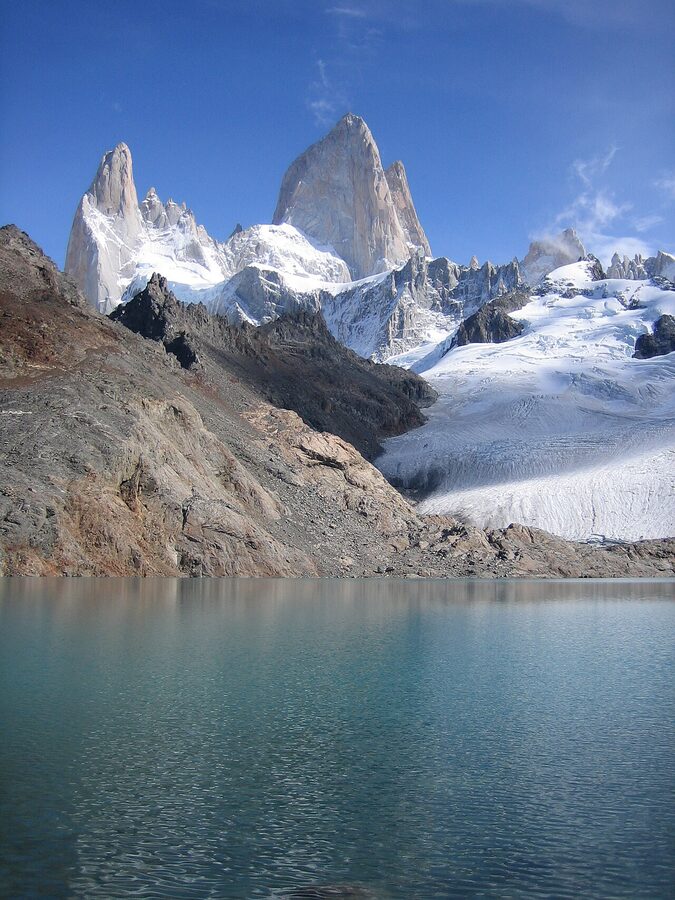
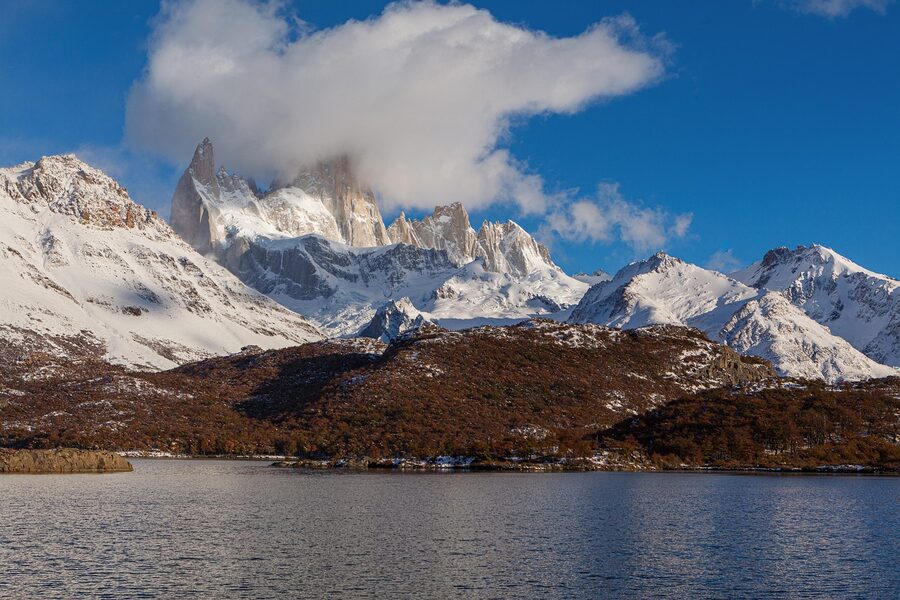
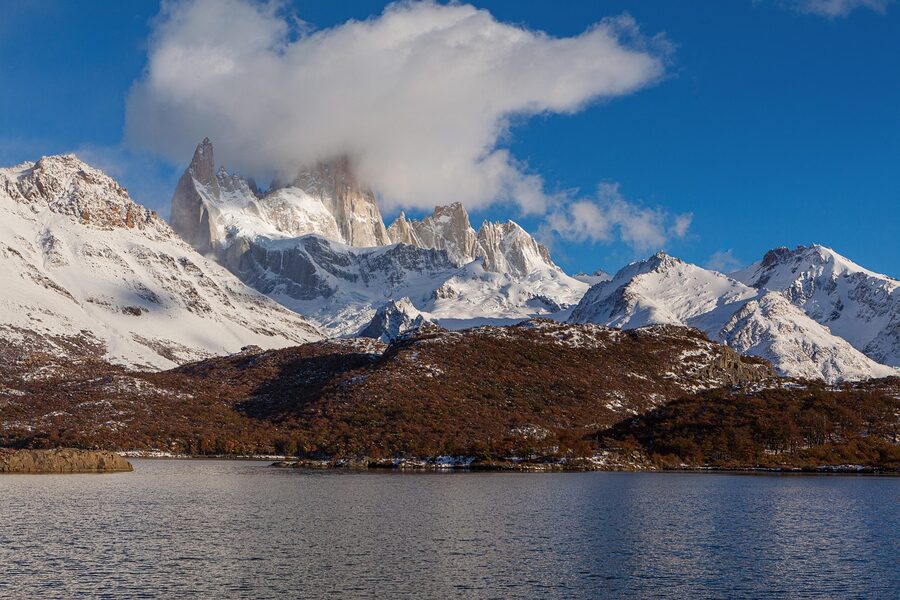
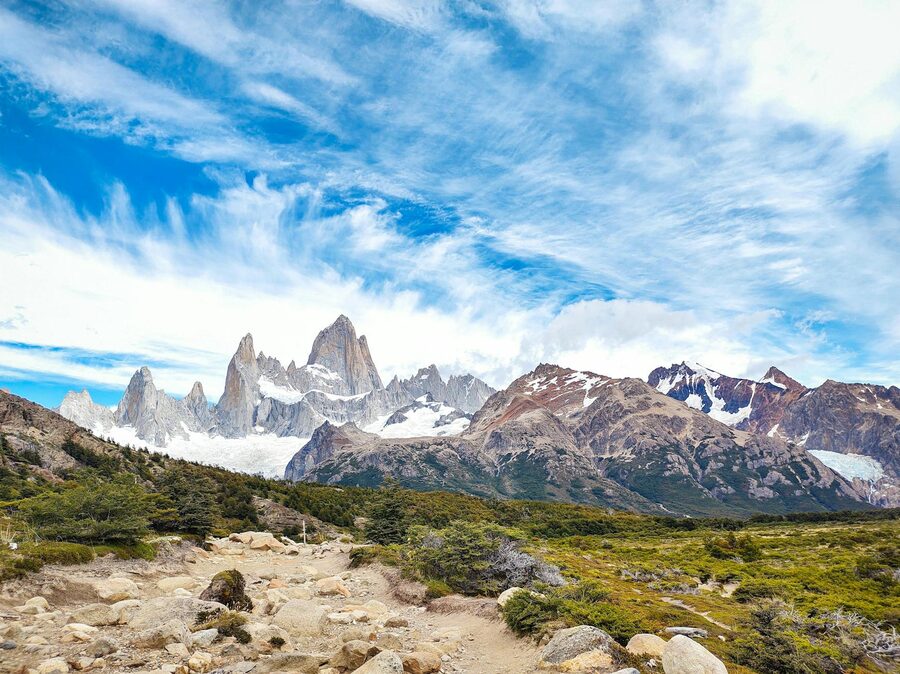
The trek to Laguna de los Tres is the headline hike of Argentine Patagonia. The trail leaves El Chalten, a small town at the northern edge of Los Glaciares National Park, and climbs roughly twenty kilometres round trip, with about 1,000 metres of total elevation gain. The first ten kilometres is gentle. The last kilometre is brutal. The view at the top is the lagoon at the foot of the mountain itself, a glacial pool of clear blue water with the granite spires of Fitz Roy and its sisters rising directly from the rim.
You do not need a permit. The park is free. There are no booked entries and no quota system. The trail is well-marked, the navigation is straightforward in good weather, and most fit hikers complete the full out-and-back in eight to ten hours including stops. The constraints are weather (wind, cloud, the risk of being on the steep final section in poor visibility) and the start time (whether you reach the summit during the photographers’ window or after it).
Where this is on the map
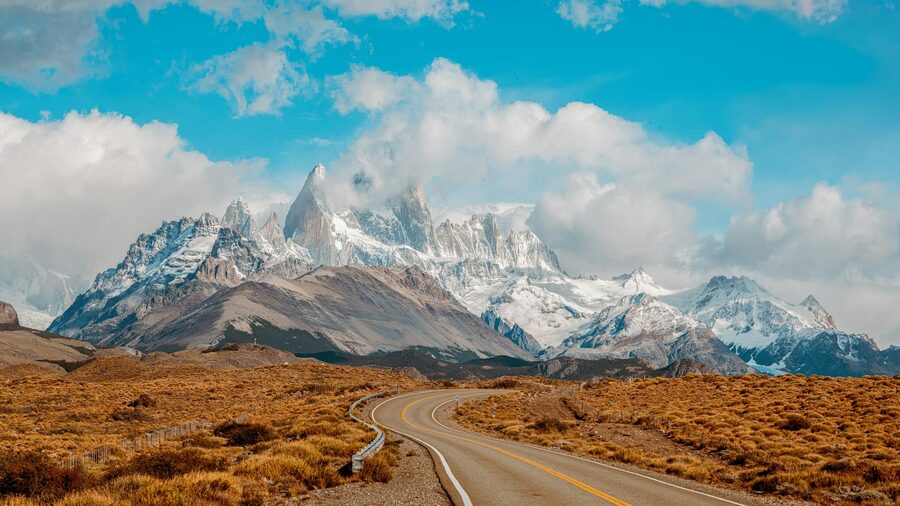
Fitz Roy sits in Los Glaciares National Park in the southern Argentine Patagonia, in Santa Cruz province. The base town El Chalten is roughly 220 kilometres north of El Calafate, the regional hub. El Calafate has the only airport in the area (FTE, served by daily flights from Buenos Aires) and is the practical entry point for any Patagonia trip into Los Glaciares.
El Chalten itself is small. About 1,800 permanent residents, founded in 1985 specifically to anchor Argentine territorial claims in this part of Patagonia, and now a town that exists almost entirely for trekking. There is one main street (San Martin), a handful of side streets, three hostels for every café, and a permanent population that more or less doubles for the trekking season.
El Chalten as base
The town’s character is what surprises most visitors. El Chalten is not a manicured tourist village; it is a working trekking town. Some of the streets are still gravel. The wind comes through the valley most afternoons and blows hard enough to require steady walking. The shops close at unpredictable hours. There is no ATM that reliably has cash; bring it with you.
The properties worth knowing about, with verified pricing as of 2026:
Mid-range, in town:
- Hosteria Senderos (around USD 170 a room). At the foot of the trailhead approach, near the bus station; large rooms, split-level family suites, in-house wine bar. The “I want comfort but not luxury” pick.
- Lunajuim (around USD 136). Central, eclectic decor, regional-cuisine restaurant, triple rooms for families.
- Hosteria Kaulem (from around USD 105). Set back from the main street, walkable to restaurants, family-friendly with an art-gallery feel. The cheapest of the proper hosterias.
Upmarket, in town:
- Destino Sur (around USD 204). Town centre with an indoor pool, hot tub and steam room — not a small thing after a day on the trail. Walking distance to the trailheads.
- Don Los Cerros Boutique Hotel (around USD 238). Traditional decor, spa, mountain views from a hillside position above town.
- Chalten Suites. Main-street boutique, recently renovated, mountain views from the rooms; one of the better-managed mid-budget options.
Luxury (out of town, all-inclusive):
- Explora El Chalten (from around USD 1,140 per room per night, all-inclusive). Half an hour north of town in the Los Huemules Reserve, with views of the Marconi Glacier and a guided-excursion programme. This is a different category of trip; the hotel does the planning, you walk where they walk.
- Aguas Arriba Lodge. About an hour north on the Rio Canadon de los Toros next to a glacial lake. Secluded alpine luxury; not the right pick if you want to be on the El Chalten trailheads at dawn.
- Patagonia Eco Domes (from around USD 700). Geodesic alpine domes with fireplaces and a yoga dome, in town. The fashion-forward option.
Budget:
- Hosteria El Paraiso. Basic rooms near the bars and restaurants, Fitz Roy views from some windows. The “$30–50 a night” end of the in-town range.
For trekkers, location matters more than star rating; you want to be within a fifteen-minute walk of the trailhead, which all the in-town options manage. Reservations are essential in the December-February peak. Outside that window, you can usually find something on arrival, but the better-located places book up at any time of year.
Reservations are essential in the December-February peak. Outside that window, you can usually find something on arrival, but the better-located places book up at any time of year. The trekking season runs from October through April; outside that window, much of the town shuts down.
The Laguna de los Tres trail, hour by hour
The standard trek runs as a long out-and-back from the northern edge of El Chalten. There are two main start points: the trailhead at the very top of San Martin street (the in-town start) and the Hosteria El Pilar trailhead twenty kilometres up Route 23 (the longer, more scenic alternative that requires transport). Most people use the in-town start.
Hour 0 to 1. The trail leaves El Chalten and climbs steadily for the first kilometre to a viewpoint over the Rio de las Vueltas valley. This first section is the most consistently steep portion of the easy half and warms you up. The path is wide, well-trodden, and impossible to miss.
Hour 1 to 2. Through forest and across small streams. The grade levels off. Mirador del Fitz Roy at around the four-kilometre mark is the first proper view of the mountain itself. On a clear day you can see why this trail exists; on a cloudy day, you walk through the same forest hoping the cloud breaks higher up.
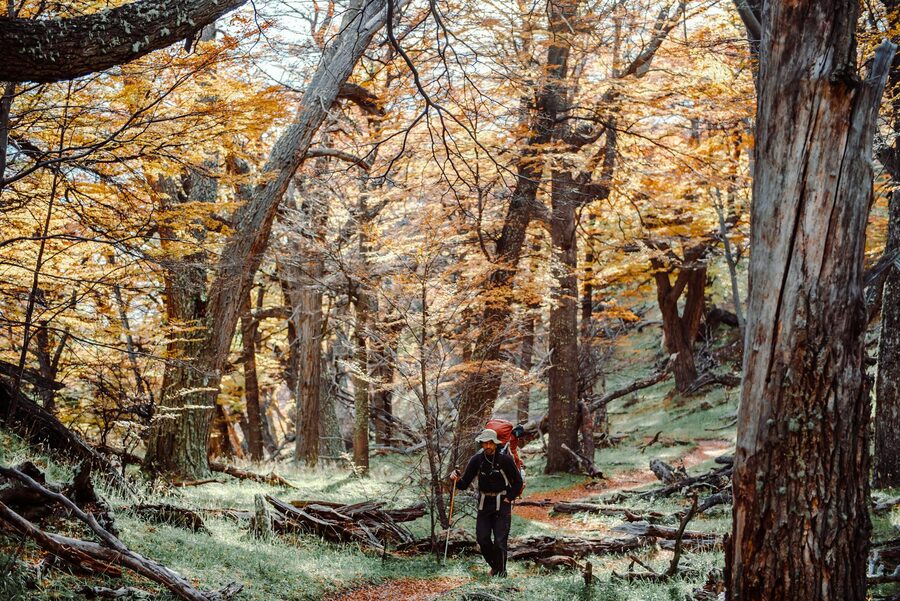
Hour 2 to 4. The middle section is gentle and pleasant. The trail crosses the Rio Blanco and traverses subalpine forest with several meadow openings. Camp Poincenot, the free wild-camp at around the eight-kilometre mark, is the multi-day option’s basecamp; even if you are day-hiking, it is the natural rest stop before the steep finish.
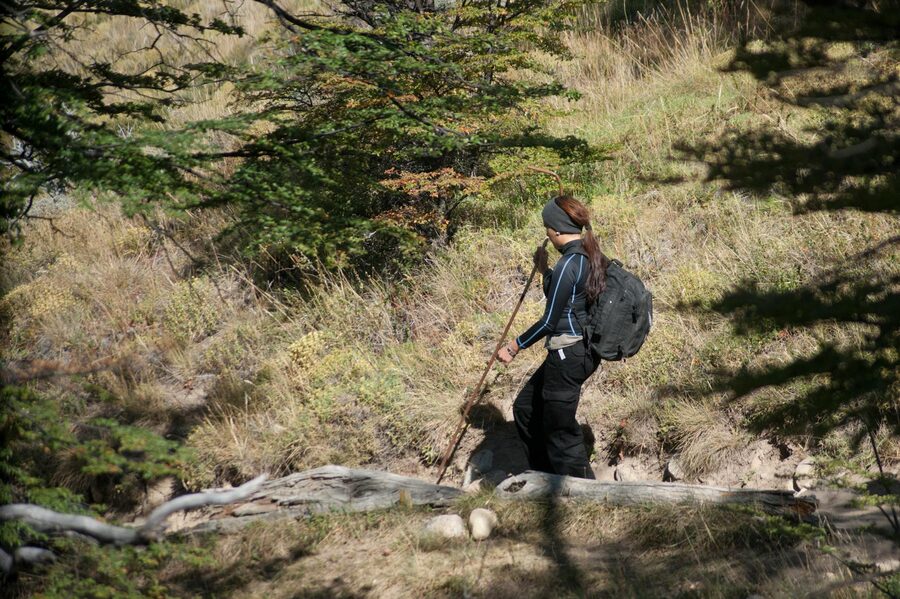
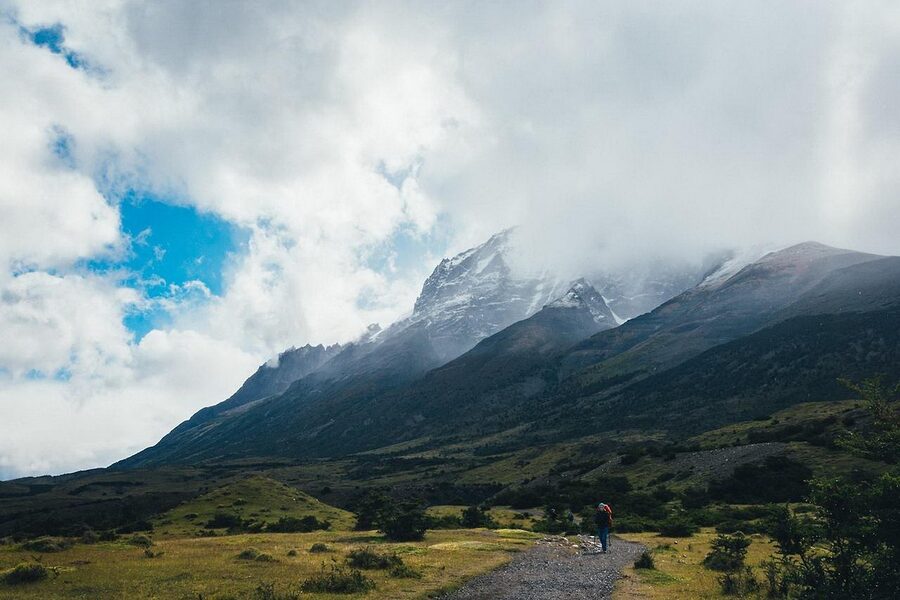
Hour 4 to 5. The last kilometre to Laguna de los Tres is the hardest hour you will do all day. The trail rises about 400 metres in roughly one kilometre, mostly on loose rock and scree. There are no steps. The wind picks up as you exit treeline. Most trekkers stop at least twice; some stop more. This is where the trek earns its difficulty rating, and where bad weather turns it from challenging to genuinely dangerous.
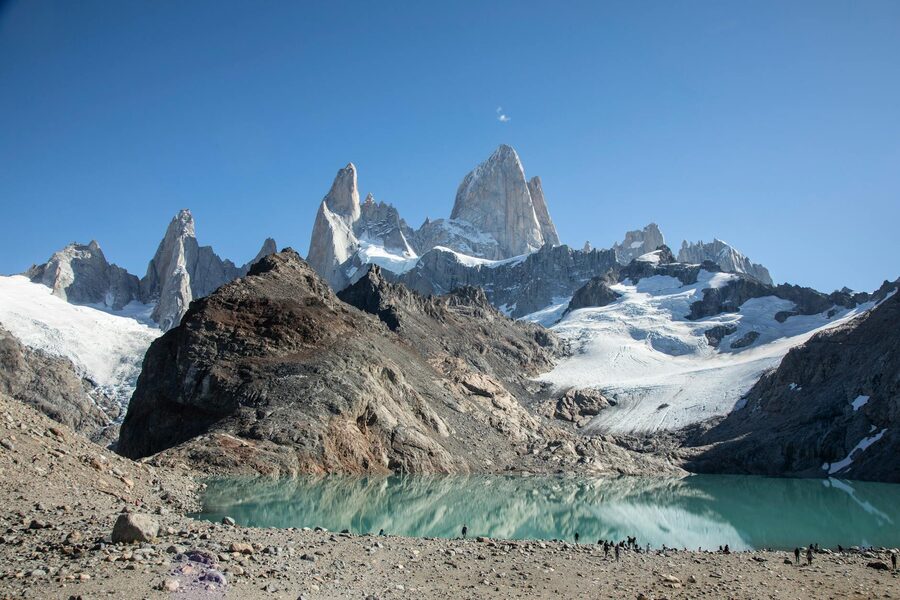
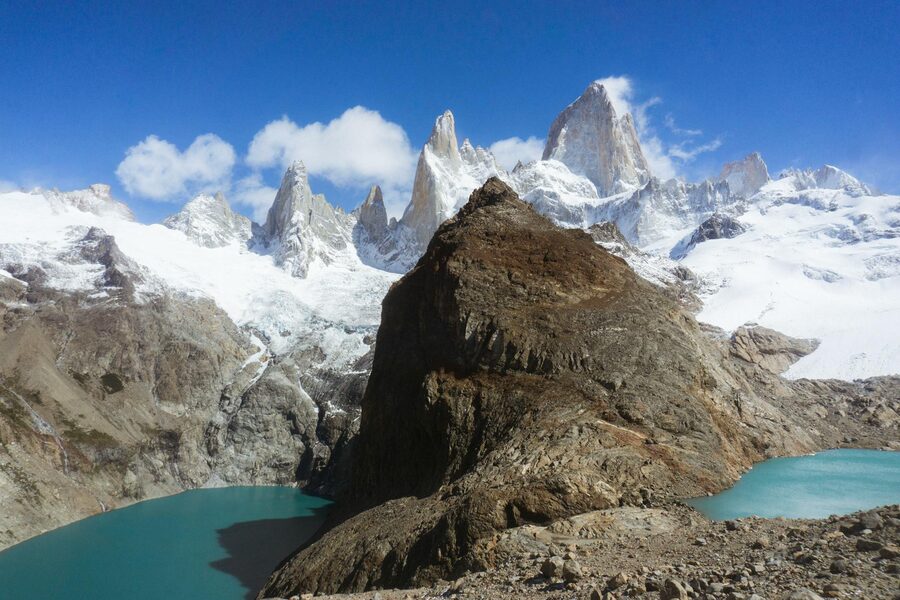
The summit. You arrive at the lagoon, which sits in a glacial bowl with Fitz Roy, Cerro Poincenot, and Aguja Saint Exupery rising out of the opposite shore. There is space to sit. Most trekkers take an hour at the top. The wind off the lagoon is cold even in summer; pack a windproof and a hat.
The descent. Coming back down the steep section is harder on the knees than going up. Take it slowly. Many of the worst injuries on this trail happen on the descent of the final kilometre. Walking poles help significantly. The full return to El Chalten via the same route runs another four to five hours including breaks.
The dawn version, and why it changes the trip
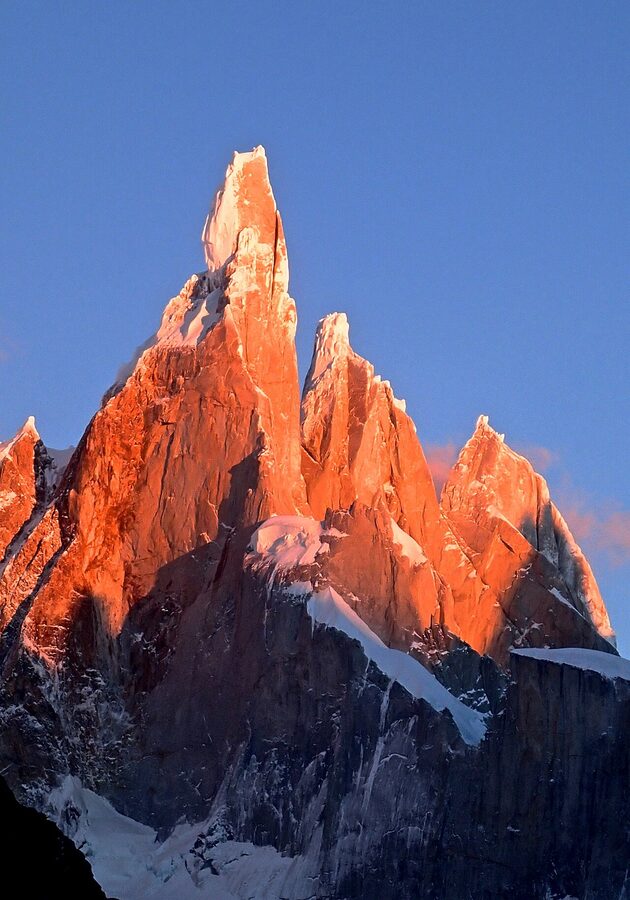
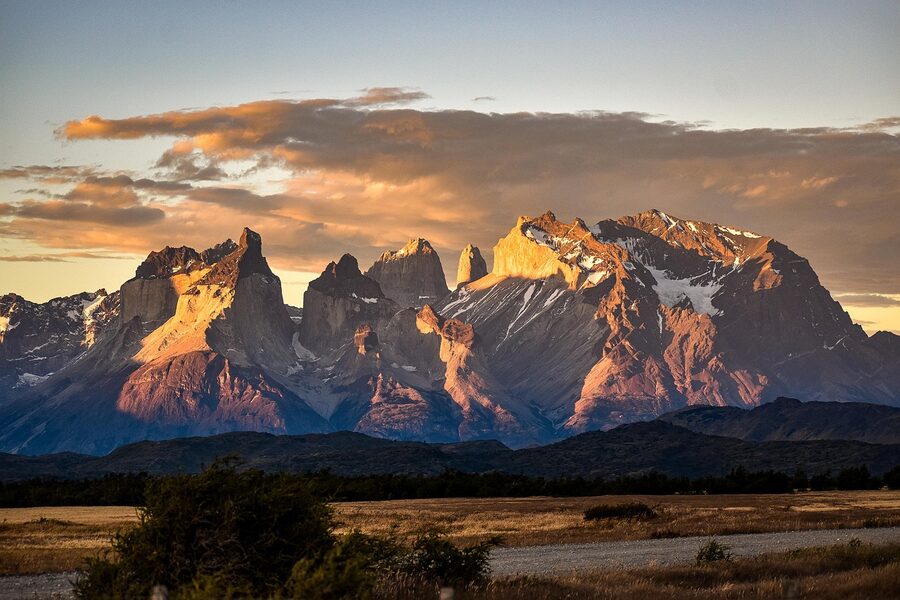
The reason the photographers go is that Fitz Roy’s east-facing wall catches direct sunrise light at the moment the sun crests the horizon, and on a clear morning the granite turns a brilliant pink for about forty minutes before the colour washes out. Standing at the lagoon during the alpenglow window is the version of this trek that lives in your memory afterwards.
To make this happen from El Chalten you have two options.
Day-hike with pre-dawn start. Leave town at four in the morning in summer (sunrise around 05:30 in December and January). The first three kilometres in the dark are easy because the trail is wide. The final kilometre in the dark with a head torch is harder and you need to pace yourself to clear the steep section before light. Most fit hikers can make this work; most casual hikers cannot.
Camp at Poincenot. Walk in to Camp Poincenot the previous afternoon (about three to four hours from town with a pack), set up at the free wild camp, sleep, and walk the final kilometre at four in the morning. Distance for the dawn approach drops to about an hour and a half. This is the strategy serious photographers and most experienced trekkers use. The trade is one extra night carrying a tent, sleeping bag, and stove.
Either way, weather is the deciding variable. Fitz Roy spends most of its days behind cloud; the Aonikenk indigenous name for the mountain is “Chaltén”, meaning roughly “smoking mountain”, because the cloud at its summit was always there. A clear sunrise window is something you stay extra days in town to chase.
Alternative routes worth knowing
The Laguna de los Tres direct out-and-back is the standard. Three alternatives are worth knowing if you have the time or inclination.
The Pilar approach. Start from Hosteria El Pilar (twenty kilometres north of town on Route 23, accessible by morning shuttle from El Chalten). The trail joins the standard route near Camp Poincenot but adds an extra eight kilometres of mostly downhill walking through more remote scenery before reaching the steep finish. Slightly harder day overall, more interesting in the early hours, and you finish back in town rather than going out and back. Many guides consider this the better one-day version.
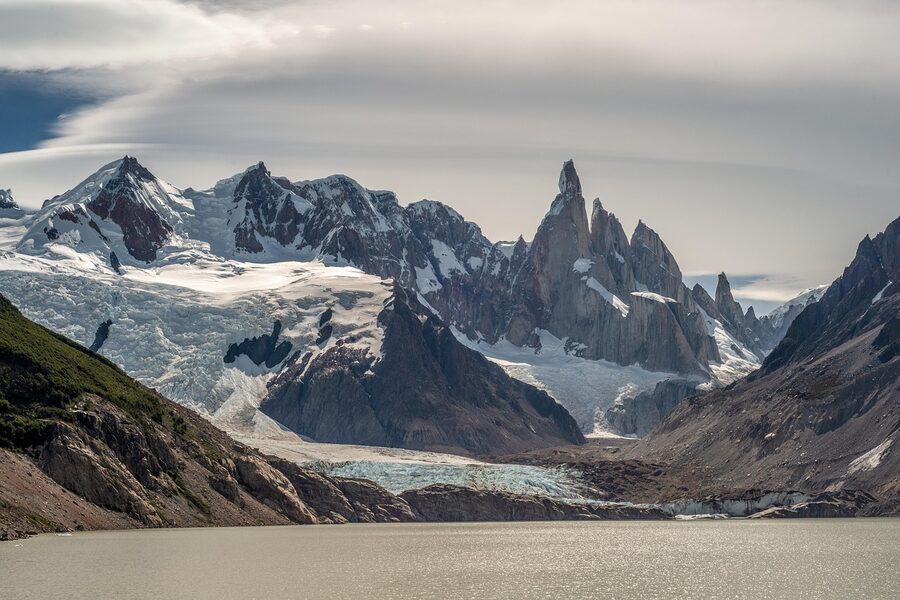
Cerro Torre add-on. The other major peak visible from El Chalten is Cerro Torre, six kilometres south-west and trekked separately to Laguna Torre. The Torre trek is shorter (around eighteen kilometres round-trip), much less steep, and culminates at a glacier-fed lake with the spire of Cerro Torre rising directly above it. Many trekkers do Fitz Roy on day one and Cerro Torre on day two as the natural pair. Either trek alone is a complete day; doing both is a complete trip.
The Huemul Circuit. The serious-hiker’s version. Four days, glacier crossings on rope, river crossings on Tyrolean traverses, mandatory permit, and views from Paso del Viento that include the Southern Patagonian Ice Field itself. This is not a casual trip; it requires backcountry experience and the right gear. If you can do it, it is one of the great treks in South America.
When to come
The trekking season runs from late October through to mid-April, with the prime window from December through February. The wider seasonality logic for the southern hemisphere summer is in the when to travel guide; for Fitz Roy specifically:
December and January. Long daylight (sunrise around 05:30, sunset after 22:00), the warmest temperatures, the most settled weather windows, the busiest crowds. Trail traffic at the steep section can mean fifteen-minute waits to pass slower groups; book your hostel six weeks ahead for these months.
February and March. The other half of the prime window. Crowds thin from mid-February. The trees in the lower forest start turning autumn colours by late March, which adds a layer to the photography. Weather is comparable to January with slightly shorter days.
October, November, April. Shoulder. Cooler nights (frost possible in October and April), some closed services in town, slightly less reliable weather but real photographers’ light. The first half of October and the second half of April can be properly cold.
May through September. Off-season. Snow on the upper trail, the steep final section can be impassable without crampons, many businesses in town closed, the buses from Calafate run reduced schedules. Not the trip to do without serious cold-weather mountain experience.
How to get to El Chalten
Almost all visitors come via El Calafate (FTE airport). The standard sequence:
Buenos Aires to El Calafate. Aerolineas Argentinas, JetSmart, and Flybondi all fly several times a day. Around three and a half hours, USD 100-200 each way depending on how far ahead you book. Both BA airports (Aeroparque, the closer city airport, and Ezeiza, the international one) have flights; check which when you book.
El Calafate to El Chalten. The standard route is a 220-kilometre paved road and a three-hour bus journey. CalTur and Chalten Travel both run multiple buses daily, around USD 25-40 each way. The morning departures (around 08:00) are the popular ones; book a day ahead in peak season. Private taxi runs around USD 200-280 if you want to combine the journey with a stop along Route 40.
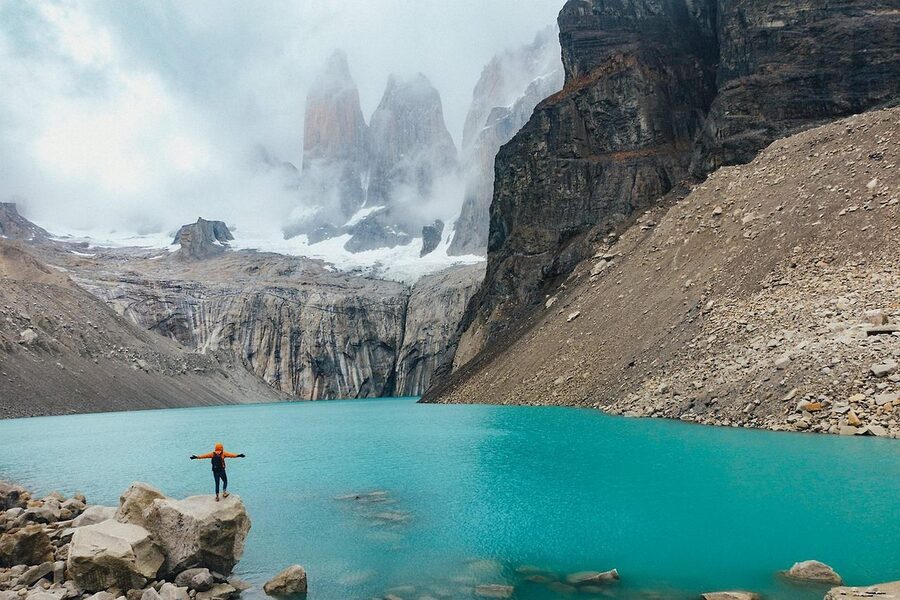
From Torres del Paine in Chilean Patagonia. If you are coming from the famous W trek in Chile, the natural overland route is by bus from Puerto Natales to El Calafate (about eight hours including border crossing), then onward to El Chalten. Most travellers split this over two days.
Money, food, water
Argentina’s economy and currency situation has been turbulent for several years and the practical advice on the ground keeps shifting. As of 2026, the consistent guidance for visitors:
Bring US dollars in cash. Crisp, large-denomination bills are best. The official exchange rate and the parallel-market rate have been close in recent years but ATM rates often lag, and the ATM withdrawal limits in El Chalten are low (sometimes equivalent to USD 100 per transaction). Two thousand US dollars in cash for a Patagonia week is a reasonable starting point for two people.
Cards work but at variable rates. Most hostels, hotels, and the better restaurants take Visa and Mastercard. Many smaller cafés and the buses do not. The rate you get on a card has been similar to the official exchange rate for the last year or two, but this can change.
Food and water. The town has two small supermarkets (La Anonima is the bigger one), a handful of bakeries, and around twenty restaurants. Self-catering for trekking lunches is straightforward and meaningfully cheaper than restaurant meals. Water is excellent; the streams along the trail are safe to refill from in most places (though most experienced trekkers carry a small filter for any standing water).
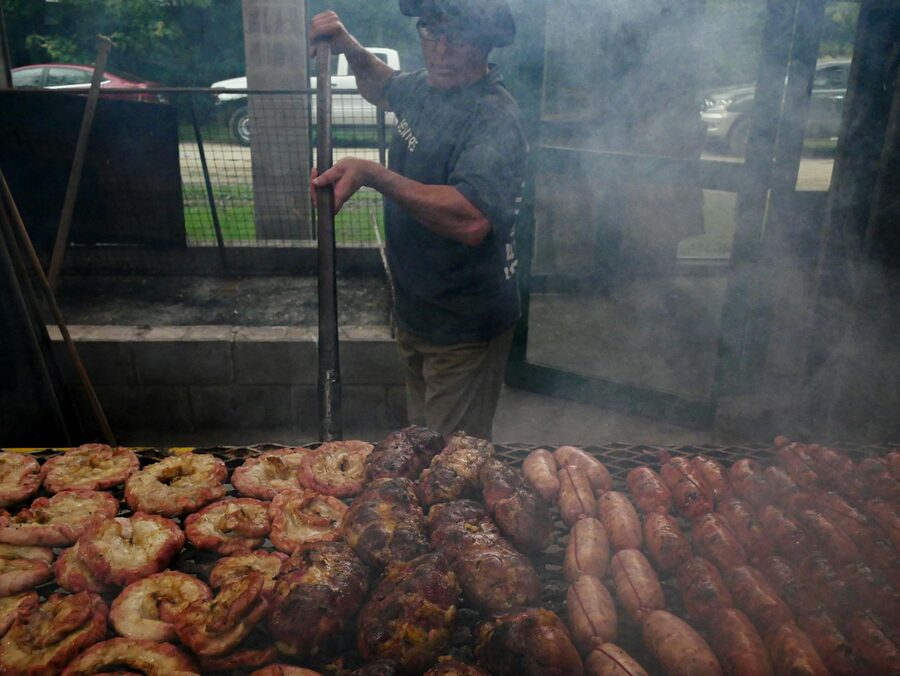
Restaurant meals run USD 15-35 per person depending on whether you are eating from the parrilla (Argentine grill, the local speciality) or a simpler café. The Patagonian lamb, slow-roasted on an iron cross over an open fire, is one of the great regional foods of the continent.
What to take
For the day-hike Laguna de los Tres trek:
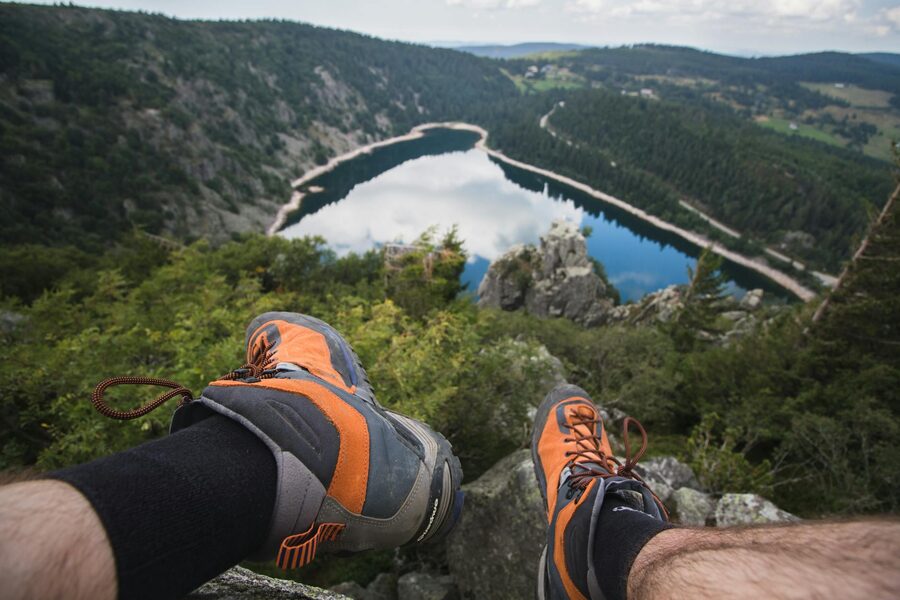
- Solid hiking boots or trail-running shoes with good ankle support
- Walking poles (worth their weight on the steep descent; rentable in town for around five US dollars)
- Layered clothing: base layer, insulated mid-layer, windproof shell, hat, gloves. The temperature at the lagoon can be ten degrees colder than in town
- Two litres of water minimum, plus a refill bottle
- Trail food: nuts, dried fruit, a sandwich, chocolate
- Sun protection: sunscreen, sunglasses, brimmed hat. The sun at altitude in summer is brutal even when the temperature is cool
- Headtorch with fresh batteries (essential for any pre-dawn start)
- Small first-aid kit, blister plasters, painkiller
- Phone with offline maps (Maps.me or Gaia GPS)
For the multi-day version with overnight at Camp Poincenot, add a tent, sleeping bag rated to zero Celsius, sleeping pad, stove and fuel, food for the additional day, and a heavier waterproof. Several of the gear shops in El Chalten rent overnight equipment by the day.
Common mistakes
Starting too late. The classic. By the time the late starters reach the steep section, the wind has picked up, cloud has moved in, and the trail is bottlenecked with people. The dawn light has been gone for hours. Start early.
Underestimating the final kilometre. Most fit hikers expect the trek’s difficulty to be evenly distributed and discover at the steep section that the previous nineteen kilometres were the warm-up. Pace your morning so you have energy for the last hour, not just the first ten.
Skipping Cerro Torre. The other half of the El Chalten experience is Laguna Torre. If you have two days in town, do both treks. They are different enough that the second one does not feel repetitive.
Trusting the forecast. Patagonian weather is famous for changing fast. Multiple forecasts (windy.com, the Argentine national service, what the hostel staff tell you) will all give different views. Carry layers and a windproof regardless of what the morning sky promises.
Not allowing weather days. The most expensive mistake. If you have only one day in El Chalten and the weather is bad, you do the trek anyway and miss the view you came for. If you have three days, you wait for the clear morning and get the trip. Allow at least two and ideally three days in town for the Fitz Roy day; weather days are not optional in Patagonia.
Wearing the wrong shoes. The trail is rocky, the descent is loose, and the steep section will reward proper footwear and punish trail runners or sneakers. If you do not own boots, rent a pair in El Chalten for around USD 8-15 per day. Worth it.
Carrying too much water but not enough food. The streams along the trail are clean and refillable. Carrying four litres from the start is unnecessary weight; one litre plus a refill stop at the streams above the Mirador works for most hikers. Calories, on the other hand, are commonly under-estimated. Aim for around 1,000-1,500 calories of trail food, more than you would normally pack for a similar distance because the cold and the altitude shift add real energy demand.
Not stopping to look back. A specific photographers’ tip. The trail climbs north and the spectacular view of Cerro Torre is to your left as you ascend. Most trekkers fix their gaze ahead at Fitz Roy and miss the side-views entirely. Turn around at each major rest stop. The mountains behind you are part of the trip too.
What it adds up to in costs
Rough budget for two people doing five days in El Chalten with the standard treks (Fitz Roy + Cerro Torre) and weather-day buffer:
| Travel style | Per couple total (USD) | What that buys |
|---|---|---|
| Backpacker | $700–1,000 | Hostel dorm beds, supermarket lunches, occasional restaurant dinner, pole rental |
| Mid-range | $1,400–2,200 | Mid-range hotel, restaurant meals, a guided day for one trek, full gear rental if needed |
| Comfort | $2,800–4,500+ | Top hotels in El Chalten, private transfers from Calafate, guided treks both days, a meal at one of the destination restaurants |
Add the El Calafate flight on top (USD 100-200 each way per person from Buenos Aires) and the bus or transfer to El Chalten (USD 25-40 each way per person, USD 200-280 for a private taxi). The flight is the single biggest variable; book six weeks ahead for the best fares.
Compared to similar trekking trips in other parts of the world, Patagonia in 2026 is mid-priced. More expensive than Nepal, similar to New Zealand or Iceland, cheaper than Switzerland or Norway. The cost of getting there is what makes the trip a serious investment; once you are in El Chalten, the daily run rate is modest.
If you would rather have it planned
Patagonia is one of the better-paying places to use a tour or a planner. The logistics (Calafate flights, El Chalten accommodation, weather days, gear rental, Torres del Paine combination if you are doing both sides of the border) are more demanding than most other South American destinations, and a tailor-made tour can pull together the pieces in a way that DIY can struggle to match for a first visit.
That said, the trek itself is best done DIY. You set the start time, the pace, the rest stops, and (most importantly) which morning you wait for. A guided group tied to a fixed departure date will hit the trail on its scheduled day regardless of weather; an independent trekker can wait three mornings for the clear one.
The view
The pictures of Fitz Roy that have made it the most-photographed mountain in Argentina do not do the place justice on the ground. The granite spires are taller than they look in the photos. The lagoon at their feet is bluer. The sound of the wind off the ice fields, the loose rock under your boots on the final scramble, the silence at the top before the next hiker arrives, none of it lives in a photograph.
The trek is hard enough that you have earned the view by the time you arrive. The view is good enough that you forget the difficulty within a day. Most people who do this hike say it is one of the best of their lives. Most of them go back at least once. The version of southern Argentina that includes a dawn hour at Laguna de los Tres on a clear morning is one of the great experiences in South American travel, and the rest of Argentina is the chapters around it.