Chichen Itza is the most-photographed Maya site in the world and one of the more misunderstood. The version most visitors arrive with is a single pyramid in a clearing, ninety minutes on a coach from Cancun, and a quick lap of the equinox shadow story. The version on the ground is bigger, older, and stranger than the brochures admit. Below: thirteen facts about the site that genuinely matter, each unpacked into what it means if you are about to visit, plus the practical timing that turns the trip from a day in a queue into a morning at one of the great archaeological sites of the Americas.

In This Article
- Fact 1: It was built by the Maya, mostly between 600 and 1200 AD
- Fact 2: It is in Yucatan state, not in Cancun
- Fact 3: El Castillo has 365 steps, one for each day
- Fact 4: The equinox shadow serpent is real and worth seeing
- Fact 5: A handclap at the base of El Castillo echoes like a quetzal
- Fact 6: The Sacred Cenote was used for human sacrifice
- Fact 7: The Great Ball Court is the largest in Mesoamerica
- Fact 8: Mayan astronomy was more accurate than Europe’s, until the 16th century
- Fact 9: It became one of the New Seven Wonders of the World in 2007
- Fact 10: It receives roughly 2.5 million visitors a year
- Fact 11: The site has a contested Toltec connection
- Fact 12: The site is much bigger than the photographs suggest
- Fact 13: It is hot, and the heat is part of the planning
- Practical: when to visit
- Practical: how to get there
- What it costs in 2026
- What to combine the visit with
- Common visitor mistakes
- How long to spend on site
- The verdict
Fact 1: It was built by the Maya, mostly between 600 and 1200 AD
The first thing to clear up is who built Chichen Itza. The site is Maya, not Aztec. The Aztecs are a different civilisation, several centuries later, in central Mexico. Chichen Itza was constructed by the Itza people, a Maya group whose name became the site’s name, with significant building activity from roughly 600 AD through to around 1200 AD. The site was largely abandoned by 1400 AD, two centuries before Spanish contact, for reasons that are still debated.
What this means for your visit: do not expect Aztec iconography. The murals, the inscriptions, and the carved figures are Maya, with a layer of Toltec influence in the later periods. The information panels at the site are explicit about this; many tour guides are not.
Fact 2: It is in Yucatan state, not in Cancun
The site sits in the central Yucatan peninsula, about 200 kilometres west of Cancun, 120 kilometres east of Merida, and roughly 40 kilometres east of the colonial town of Valladolid. The Cancun-based tour buses make the journey in around two and a half hours each way, which means a coach day from Cancun is around fourteen hours total for about three hours on the site itself.
What this means for your visit: if you can base in Valladolid for one night, the site is only thirty minutes away and you can arrive at the gate when it opens at 08:00, well ahead of the Cancun coach groups that show up around 10:30. Valladolid is also a quietly excellent colonial town worth a day in its own right.
Fact 3: El Castillo has 365 steps, one for each day
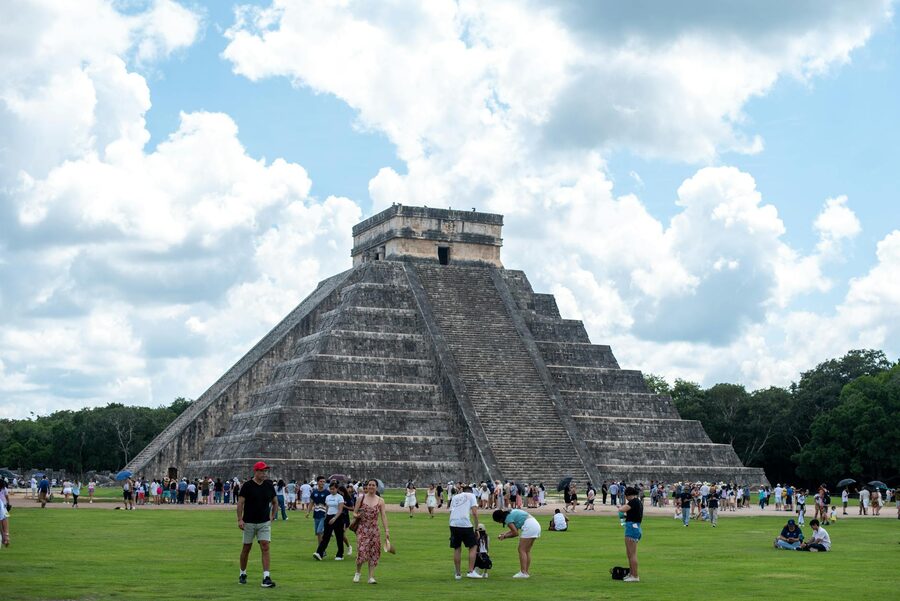
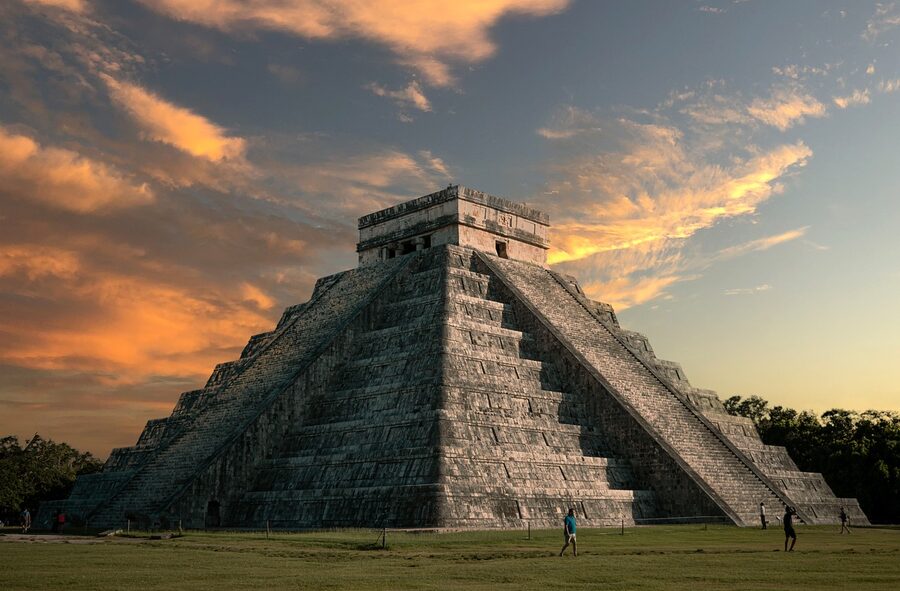
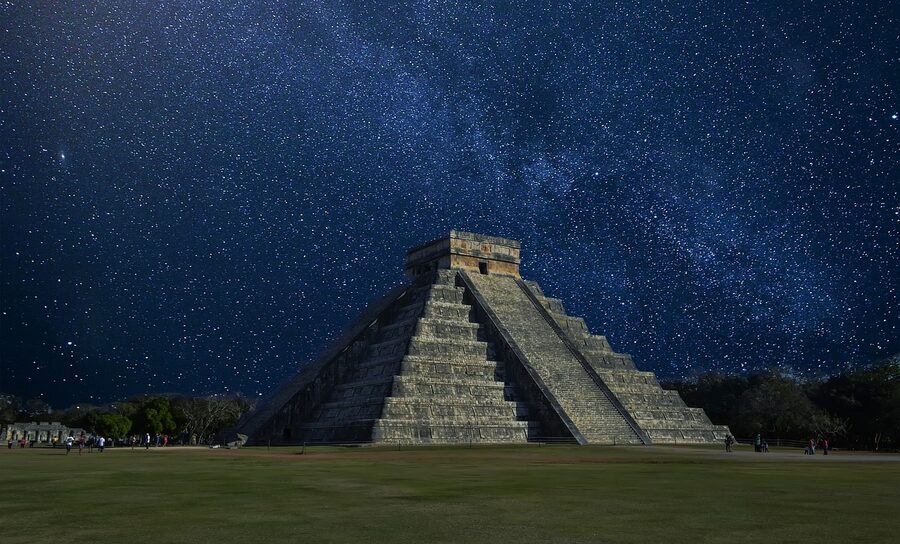
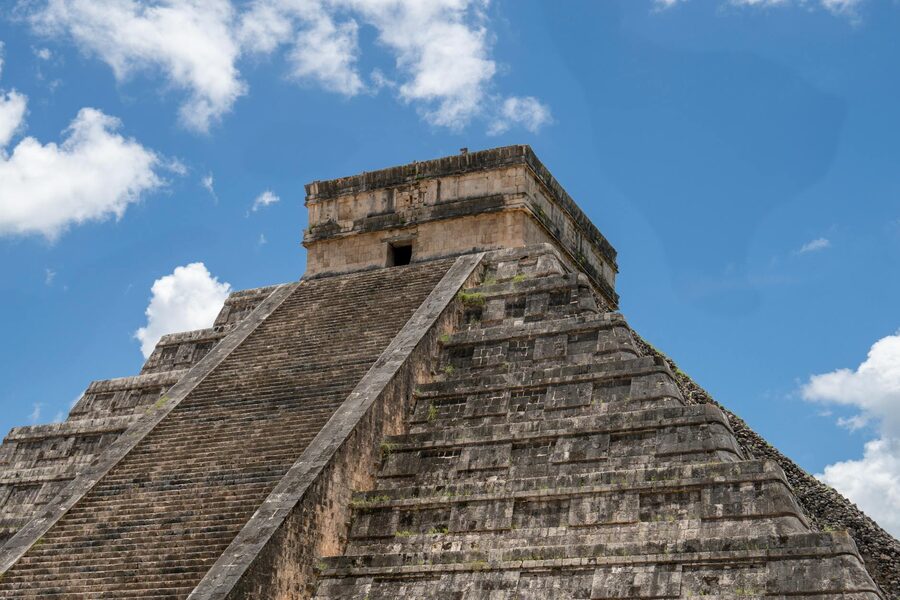
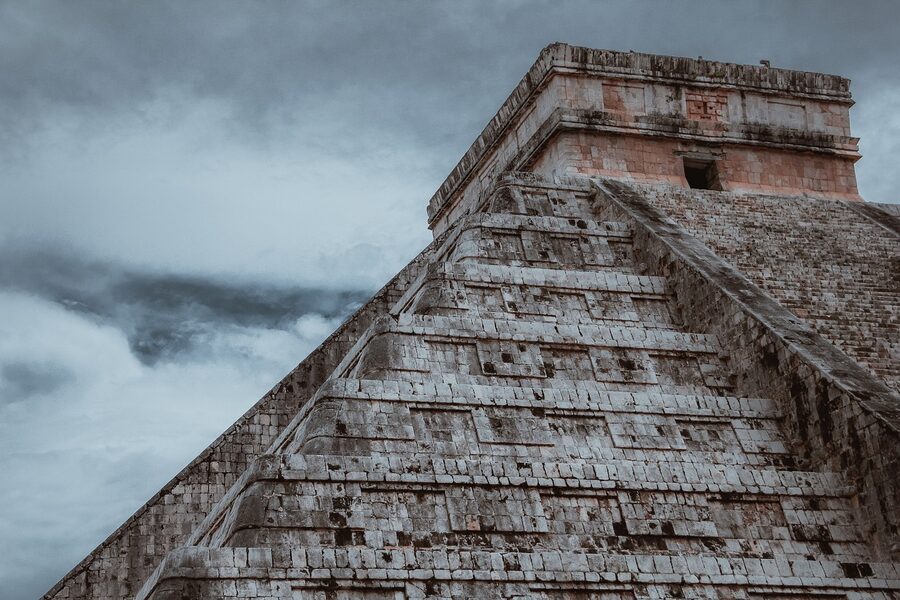
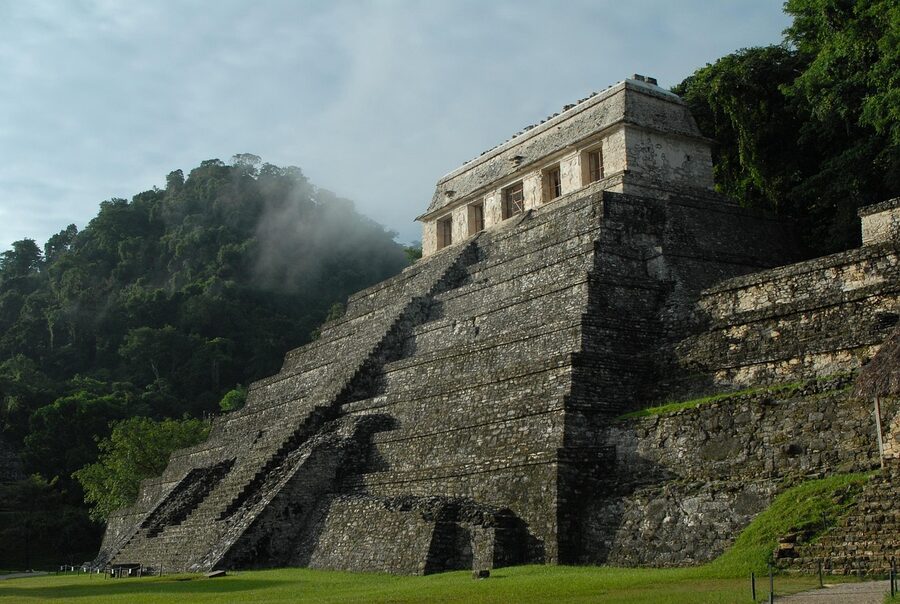
The main pyramid, called El Castillo by the Spanish or the Temple of Kukulcan by the Maya, has nine stepped platforms and four staircases. Each staircase has 91 steps; the platform at the top counts as one. 91 times 4 equals 364, plus one for the platform makes 365. The total matches the number of days in the solar year, which is not a coincidence; the pyramid was built as a calendar in stone.
What this means for your visit: you cannot climb the pyramid. Climbing was banned in 2006 after a death on the steps. The viewing is from the base, all sides visible by walking around. The 365-step counting is something you do with your eyes, not your feet.
Fact 4: The equinox shadow serpent is real and worth seeing
Twice a year, on the spring and autumn equinoxes (around March 21 and September 21), the late-afternoon sun casts a shadow on the north-west staircase of El Castillo that creates the illusion of a serpent slithering down the side of the pyramid. The effect lasts about thirty-five minutes, peaks around 16:00, and is the result of intentional architectural alignment. The Maya knew exactly what they were doing.
What this means for your visit: if you are visiting on the equinox, expect tens of thousands of other visitors. The site is at its busiest of the year on these two days. If the shadow is the reason for your trip, plan to arrive at the site at 08:00 and accept that the actual shadow window will be packed; for everyone else, the equinox is the worst possible day to visit, and one of the days within a week of either equinox gives you the same shadow effect (with about ninety percent of the intensity) at five percent of the crowd.
Fact 5: A handclap at the base of El Castillo echoes like a quetzal
Stand thirty metres from the base of the pyramid and clap your hands once. The echo that comes back is a sharp, descending chirp that sounds remarkably like the call of the resplendent quetzal, the green-feathered bird the Maya considered sacred. The acoustic effect is generated by the staircase steps acting as a “chirped echo” reflector, with each step adding a slightly delayed return. Modern acoustic researchers have written papers about it.
What this means for your visit: try it once. The site staff and the local tour groups demonstrate it constantly during the day, so you will hear it whether you clap or not. The phenomenon is more striking when the ambient noise is low, which is another reason the early morning visit is the better one.
Fact 6: The Sacred Cenote was used for human sacrifice
Three hundred metres north of the main pyramid, a circular sinkhole called the Cenote Sagrado opens into the limestone bedrock. Excavations of the cenote between 1904 and 1961 recovered gold and jade artifacts, ceramic offerings, and human skeletons. The cenote was used as a sacrificial site over several centuries, with both objects and people thrown in as offerings to the rain god Chaac.
What this means for your visit: the cenote is a fifteen-minute walk from El Castillo and easily missed. The path is a stone causeway through forest. The cenote itself is too sheer-sided to swim in (and not open for swimming anyway), but the experience of standing at the rim and looking down into water that is still here after fifteen hundred years is genuinely affecting.
Fact 7: The Great Ball Court is the largest in Mesoamerica
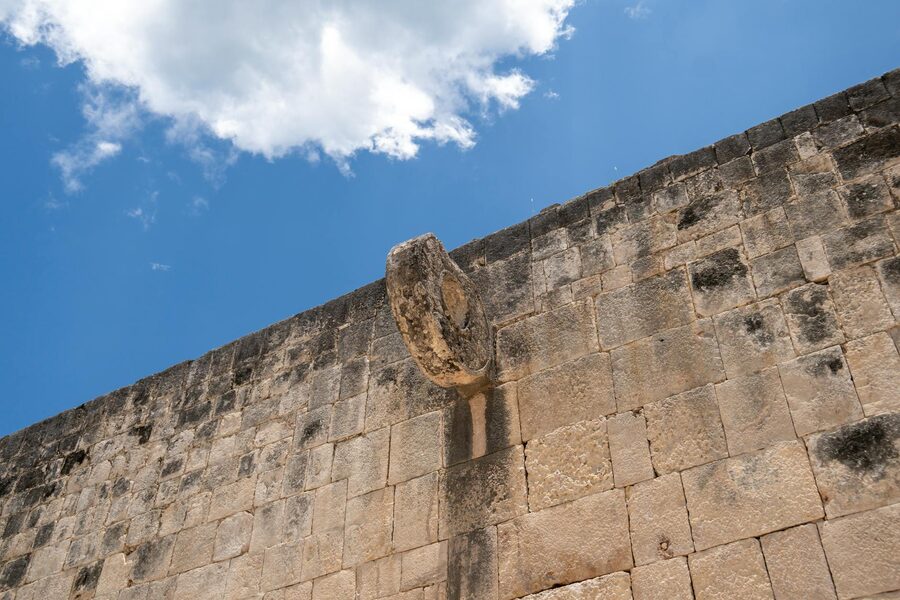
Just west of El Castillo sits the Great Ball Court, a 168-metre-long rectangular court bounded by two parallel stone walls. The Maya played a ritual ball game in courts like this throughout Mesoamerica; the Chichen Itza version is the largest one ever found. Stone hoops set vertically high in the side walls were the goals; the rules and the consequences for the losers vary by version of the story, but most archaeologists agree the game was central to political and religious life and that ritual sacrifice was sometimes involved.
What this means for your visit: stand at one end of the ball court and have your travel companion stand at the other. Speak in a normal voice. The whisper carries, intelligibly, the full 168 metres. The acoustic effect was deliberate (Mayan acoustic engineering is one of the under-discussed features of the site) and you can demonstrate it for yourself in fifteen seconds.
Fact 8: Mayan astronomy was more accurate than Europe’s, until the 16th century
The Mayan calendar tracked the solar year to within a day every two thousand years. The Mayan astronomers’ tables for predicting the position of Venus were accurate to within two hours over the course of fifty years. The European Julian calendar that the Spanish brought to the Americas was significantly less accurate; it was the Spanish, not the Maya, who eventually had to fix their astronomy.
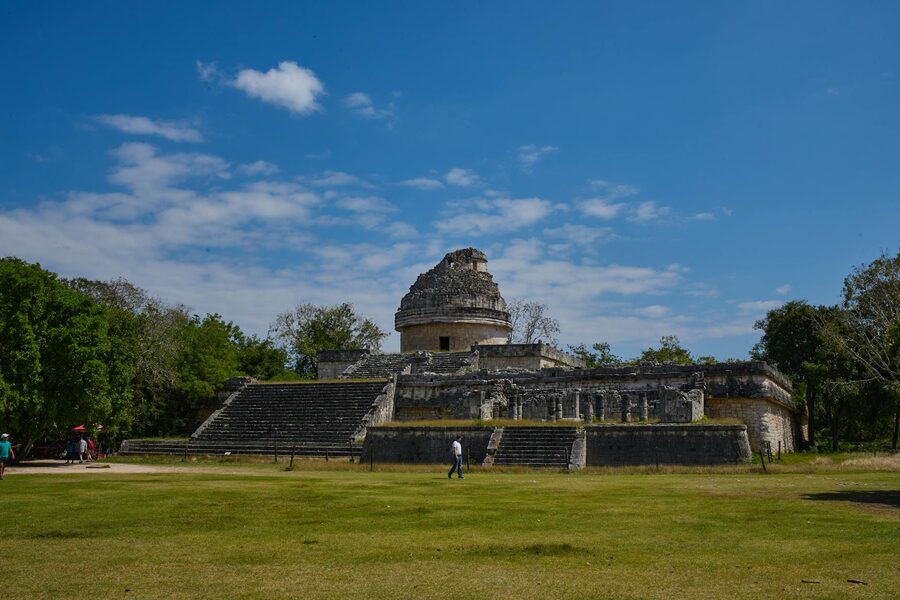
What this means for your visit: the small round building at the south of the site, called El Caracol (the snail) for its spiral interior staircase, was an astronomical observatory. The slits in its walls aligned with specific astronomical events, including the appearance of Venus as both morning and evening star. Most visitors walk past El Caracol on the way to the main pyramid; it is worth ten minutes on the way back.
Fact 9: It became one of the New Seven Wonders of the World in 2007
In 2007, an internet vote organised by the Swiss New7Wonders Foundation selected seven “new” wonders from a list of finalists. Chichen Itza was one of them, alongside the Taj Mahal, the Great Wall of China, Petra, the Colosseum, Machu Picchu, and the Christ the Redeemer statue. The voting was unscientific, the academic archaeology community was sceptical of the process, and UNESCO declined to participate. The list nonetheless gave Chichen Itza a tourism boost that has more or less doubled visitor numbers over the following two decades.
What this means for your visit: the New 7 Wonders sticker is responsible for a meaningful chunk of the crowd. If you are doing a multi-site Latin America trip, you will likely have done or be planning Machu Picchu and Christ the Redeemer too; the three together are sometimes booked as a New 7 Wonders Latin America package by tour operators.
Fact 10: It receives roughly 2.5 million visitors a year
Chichen Itza is the second-most-visited archaeological site in Mexico after Teotihuacan, and one of the more-visited sites in Latin America. About 2.5 million visitors come every year, with roughly 80% concentrated in the December-April high season. On the busiest days (around the equinoxes, the Easter break, and Christmas week), the site sees seven thousand to ten thousand visitors per day.
What this means for your visit: the gate opens at 08:00 and the first Cancun coach buses tend to arrive between 10:00 and 10:30. The two-hour window from 08:00 to 10:00 is the difference between a calm visit and a packed one. Stay in Valladolid the night before, take a 07:30 colectivo, and you will have El Castillo to yourself for the first hour. This is the single biggest practical decision for the visit.
Fact 11: The site has a contested Toltec connection
Some of the architectural and iconographic elements at Chichen Itza, particularly in the later building phases (after roughly 900 AD), bear a striking resemblance to elements found at the Toltec capital of Tula, near Mexico City. For most of the twentieth century, archaeologists explained this with a “Toltec invasion” theory: that a Toltec elite migrated south and imposed their style on the local Maya. More recent scholarship has questioned this, suggesting the relationship was more equal, more bilateral, and more Maya-led than the original theory allowed.
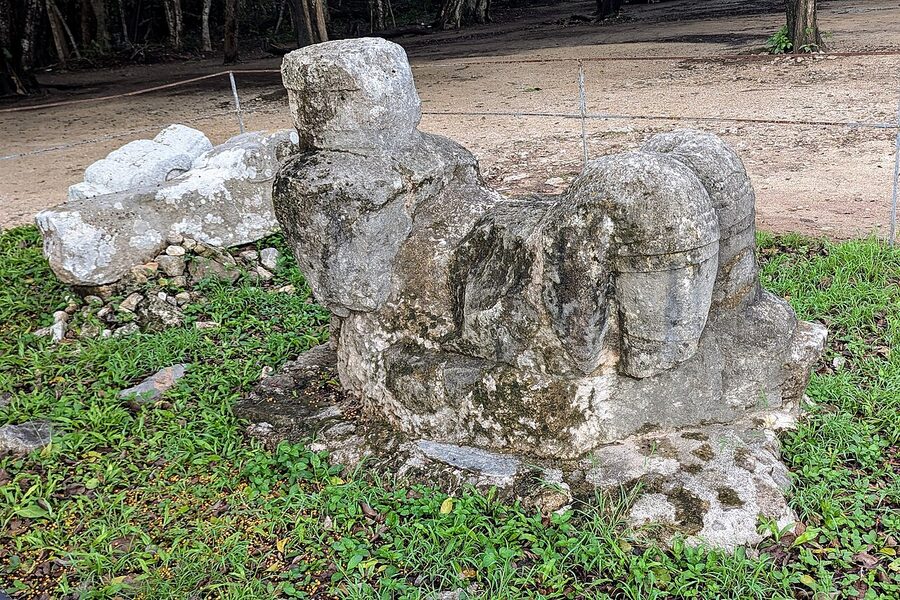
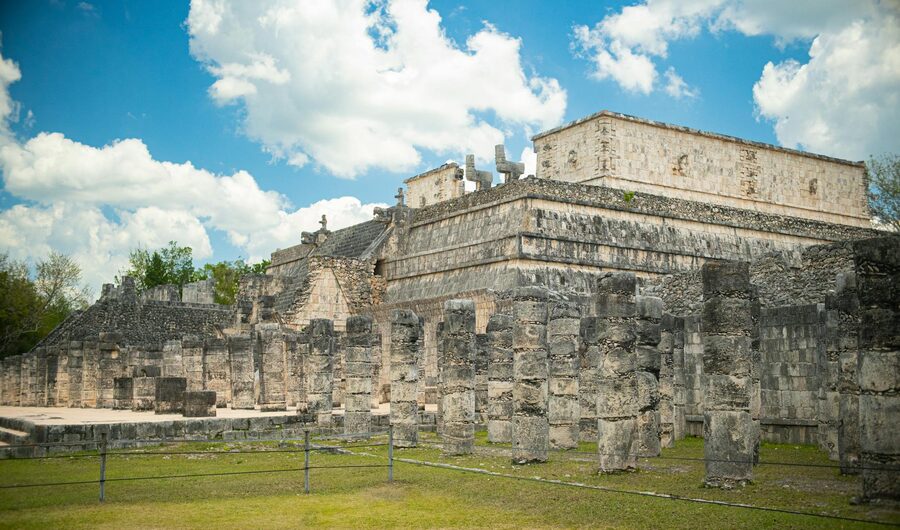
What this means for your visit: the Temple of the Warriors and the columns of the Thousand Columns plaza are the most visibly “Toltec-style” elements at the site. Look at the chacmool figure (the reclining stone figure with a bowl on its stomach) in the Temple of the Warriors; that exact form appears at Tula. What it means is still being argued.
Fact 12: The site is much bigger than the photographs suggest
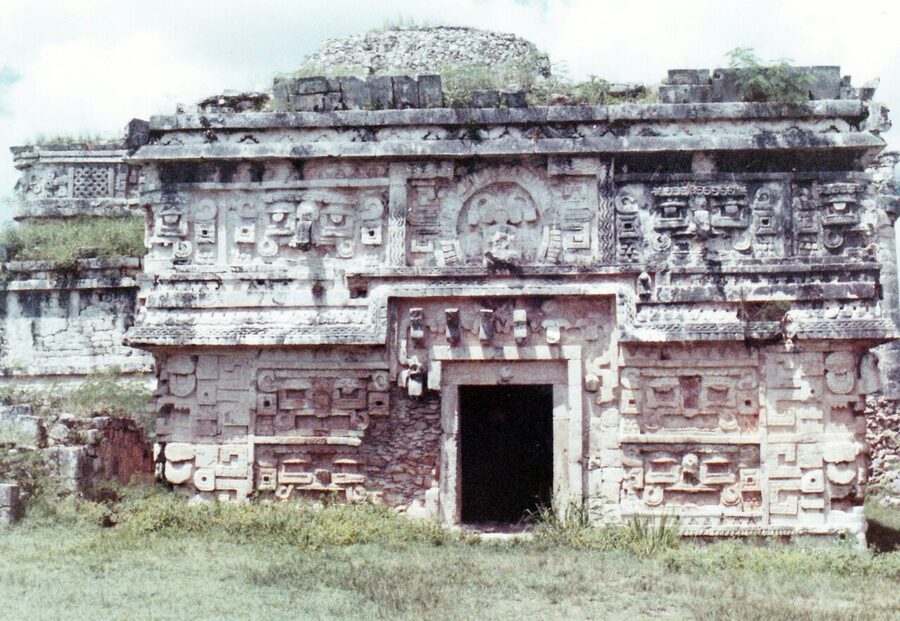
The total site area is around 6.5 square kilometres, of which about half a kilometre is open to the public. Beyond the main pyramid, the ball court, the Sacred Cenote, the Temple of the Warriors, and El Caracol, the site contains several less-visited groups: the Old Chichen (the older south-end buildings), the Akab Dzib, the Casa Colorada, the Las Monjas group with its rich relief carvings, and a large unexcavated area still being studied. Most visitors see roughly thirty percent of what is open and almost none of what is not.
What this means for your visit: allow three hours minimum. Five hours is better. Most coach tours give you ninety minutes to two hours, which is enough to see El Castillo and the ball court and almost nothing else. If you are visiting from Valladolid by colectivo, you can stay as long as you like.
Fact 13: It is hot, and the heat is part of the planning
Yucatan in any season is warm; the dry season (November through April) is the more comfortable window, but even in January the midday temperature can reach 30 Celsius and direct sun at the open central area is brutal. By 11:00 the heat changes the whole character of the visit. By 14:00 most visitors who are still there are looking for shade, not stones.
What this means for your visit: bring more water than you think you need (two litres minimum per person), a brimmed hat, and sunblock. The site has very little shade. The cenote area has trees; the central plaza has none. The seasonality logic for the wider Yucatan trip is in the when to travel guide, but for Chichen Itza specifically, November through early March in the early morning is the right window.
Practical: when to visit
The combined best window is November through early March, on a weekday morning, arriving at gate-opening (08:00). Avoid:
- The two equinoxes (around March 21 and September 21): fifty thousand visitors descend
- Easter week (Semana Santa): Mexican domestic tourism surges
- Christmas week and New Year: international tourism peaks
- Hurricane season (June through October, peak August-September): heat, humidity, and weather risk
The site is open seven days a week as of 2026 (the “closed Mondays” tradition that some other Mexican sites still follow does not apply here), but always check the official Yucatan tourism site (yucatan.travel) before committing to a date.
Practical: how to get there
From Cancun: the standard coach-tour day is 07:00 pickup to 21:00 return, around 70-100 US dollars per person. The driver is your driver, the guide is your guide, the timing is the operator’s timing. You will arrive in the late-morning peak and leave in the early afternoon. This is the option to choose only if you cannot stay anywhere overnight.
From Cancun, DIY: rent a car (around 50-70 US dollars a day), drive yourself in just over two hours each way, leave Cancun at 06:00 to arrive at gate-opening. Park outside the entrance for around 80 pesos.
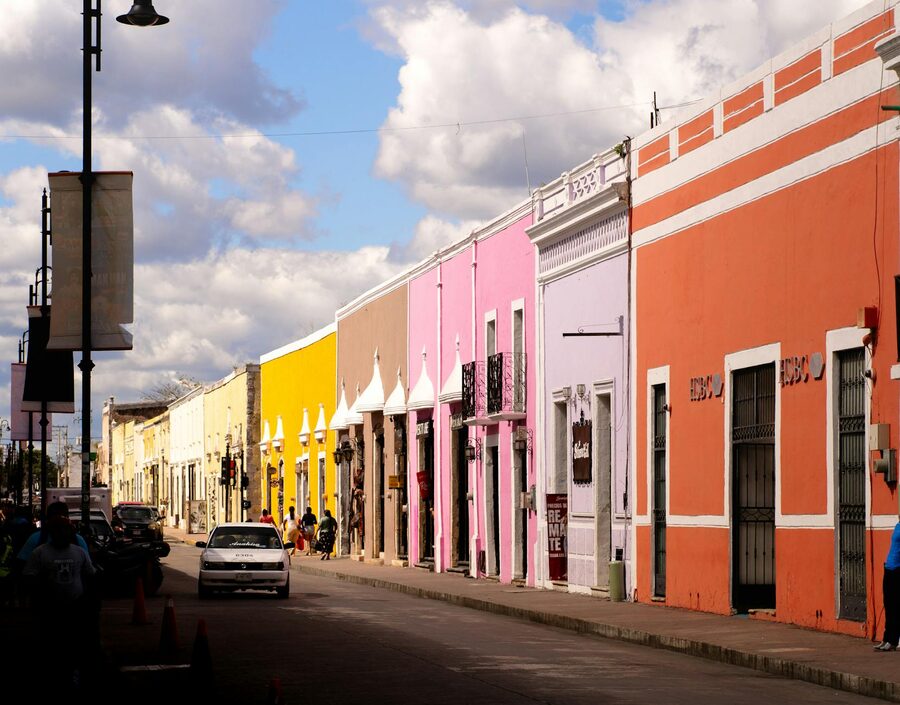
From Valladolid: the better version. Stay one night in Valladolid (a quietly excellent colonial town with cenotes of its own), take a 07:00 colectivo (shared van) for around 60 pesos, arrive at gate-opening, see the site in the cool morning, return to Valladolid for lunch.
From Merida: two hours by car or by ADO bus. A reasonable day-trip but the timing is harder than from Valladolid; the first ADO bus does not arrive at the site until around 10:30.
From Playa del Carmen or Tulum: three hours by tour, around 90-120 US dollars. The tours from this side often combine Chichen Itza with a swim at a cenote and lunch at Valladolid. Decent value for a full day if you do not have a car.
For travellers who would rather have the trip planned around their dates, a tailor-made tour built around the Yucatan rather than booked off the Cancun resort strip is one of the better routes; the standard package tours tend to give you the worst version of the visit (the late-arrival, hot-and-crowded one), where a planner can build the trip around an early-morning gate.
What it costs in 2026
Site entry as of 2026 runs around 638 pesos (USD 35) for foreign visitors. Mexican nationals pay much less. The fee is split between the federal INAH (the National Institute of Anthropology and History) and the state of Yucatan; both are accepted in pesos at the gate or by card. Children under thirteen are free.
Add roughly 200-400 pesos for transport from Valladolid (round-trip colectivo), 100 pesos for parking if driving, and 200-500 pesos for water and lunch. A self-organised day from Valladolid runs USD 50-80 per person all-in. A coach tour from Cancun runs USD 70-100 plus tips. A private guide at the site (well worth it for first-time visitors) costs around USD 50-80 for two hours.
What to combine the visit with
The smartest Chichen Itza trip is the one that does not stop at Chichen Itza. The Yucatan peninsula is dense with sites and stops that pair naturally with a morning at the pyramid; building the day or the trip around the cool early hours at the main site and the rest of the Yucatan in the afternoon is the version that takes the trip from a tourist day to a real introduction to Maya country.
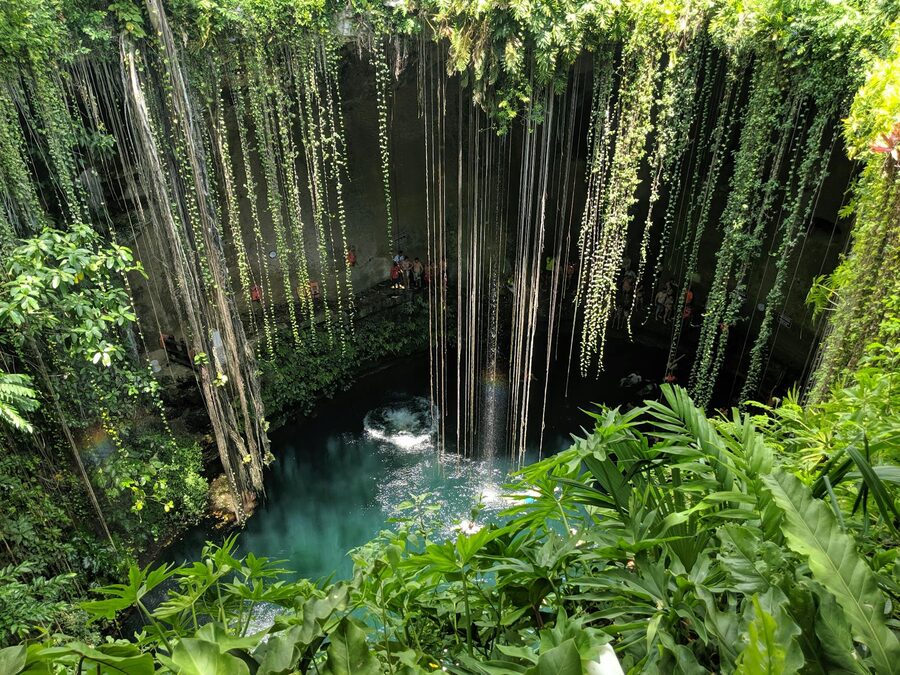
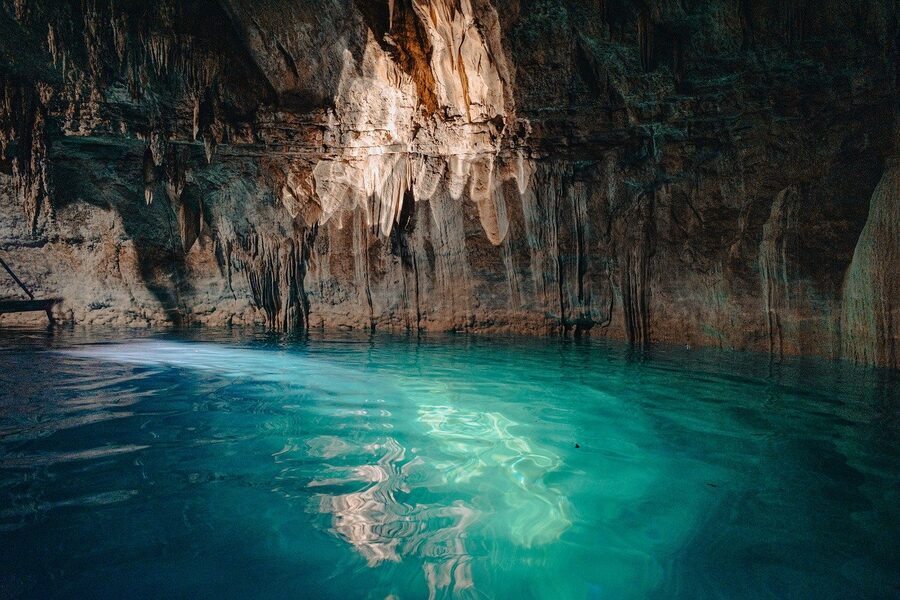
Cenote Ik Kil sits five kilometres east of Chichen Itza on the road back to Valladolid. It is one of the more photographed cenotes in the Yucatan, with hanging vines and a 26-metre drop to the water. Most coach tours stop here for an hour after the site; if you are doing the trip yourself, swimming after a hot morning at the pyramid is the right way to break up the day. Expect crowds; cenote Ik Kil is the most-visited single cenote in Yucatan, and the parking lot fills with tour coaches by midday.
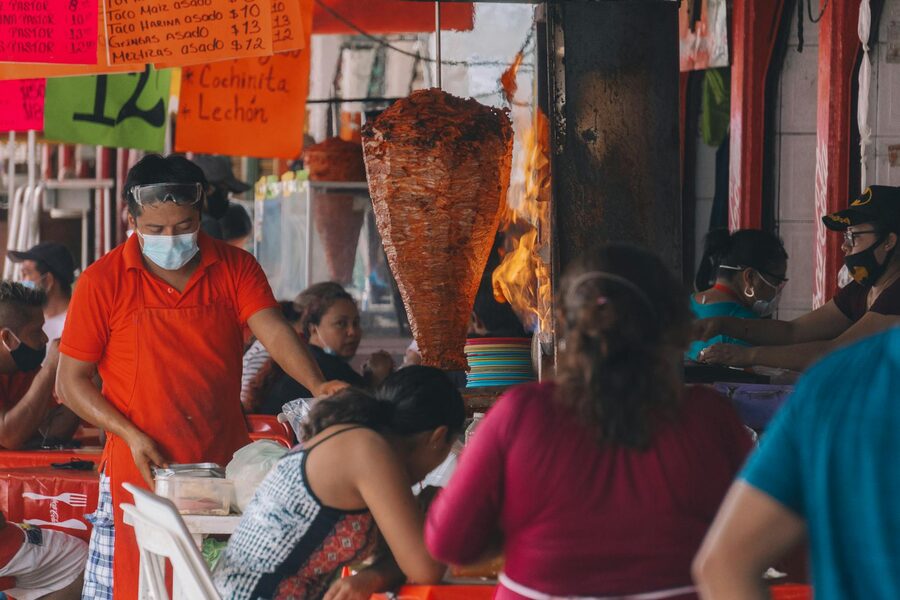
Valladolid is forty kilometres east, the colonial town I keep recommending as the base. The main square (Parque Francisco Canton), the yellow church of San Servacio, the convent of San Bernardino de Siena, and the painted heritage streets are the obvious anchors. The food is the second reason to come, and it is meaningfully different from the Tex-Mex you may know — more sour orange, more achiote, more recado paste, less chili. The places worth eating in:
- Loncheria Canul (Bazar Municipal, just off the main plaza, cheap): the local cocina-economica pick for pollo en escabeche oriental and sopa de lima.
- Taqueria Ebeneezer (inside the Mercado Municipal, cheap): the place to try pibihuajes (cochinita-stuffed bread baked over coals) and salbutes.
- Loncheria Olich (Calle 40, Santa Lucia, cheap): longaniza de Valladolid (the town’s signature pork sausage) and huevos motuleños for breakfast.
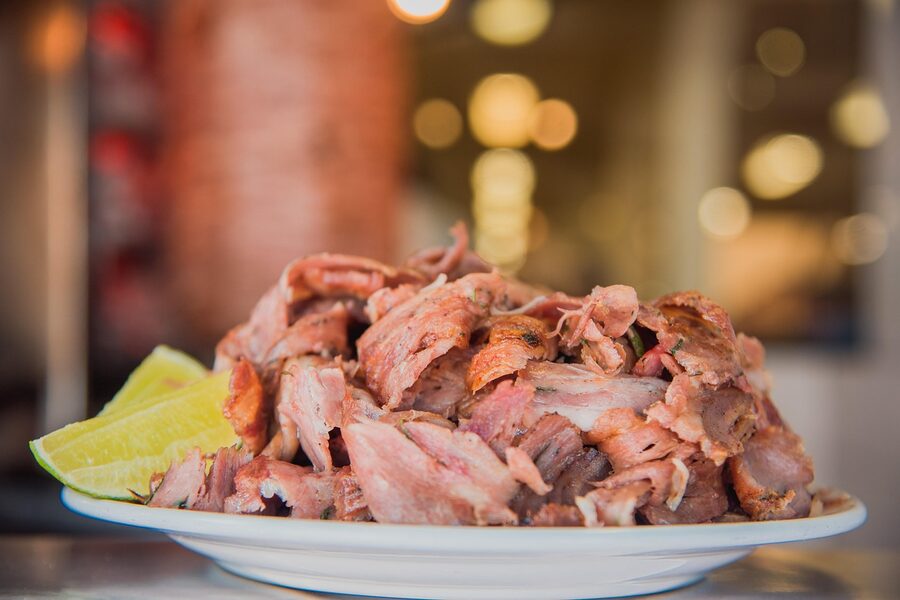
- Echate un Taco (Calle 41, mid-range): the named cochinita pibil specialist — pork marinated in achiote and sour orange, wrapped in banana leaf, sixteen hours slow-roasted.
- Restaurante Constanza (Calle 37, mid-range): a sit-down option for longaniza done properly, plus the harder-to-find Yucatecan classics like papadzules.
Ek Balam is a smaller, much-less-visited Maya site thirty minutes north of Valladolid. The main pyramid here can still be climbed (as of 2026), and the carved stucco frieze on the upper temple is one of the better-preserved Maya artworks in the region. Half a day from Valladolid; pair it with Cenote X’Canche which is on the same access road.
Coba, the other major Maya site in the area, sits ninety minutes south-east of Chichen Itza on the road toward Tulum. The main Nohoch Mul pyramid at Coba is taller than El Castillo (42 metres versus 24) and was climbable until late 2020; current rules vary by year so check before going. The site itself has bicycles for rent, the architectural distance between buildings is greater than at Chichen Itza, and a half-day visit is a good complement.
Common visitor mistakes
Five things that catch first-time visitors:
Hiring a guide outside the gate. Independent guides at the entrance are common and most are licensed, but the quality varies wildly. The official certified guides at the site office (look for the SECTUR-issued ID badge) are reliably good; the ad-hoc ones outside the parking lot vary from excellent to nonsense. If you are paying for a guide, do it inside the gate from the official kiosk; pay around USD 50-80 for a two-hour tour for two people.
Underestimating the souvenir-vendor density. The path between the main building groups is lined with vendors selling Maya-themed crafts, jaguar masks, obsidian knives, and handmade textiles. Most of what you see is not actually local; some of it is. The “ten-dollar” prices on offer are typically negotiable to half. The vendor culture is part of the modern Chichen Itza experience and the noise from a dozen of them simultaneously imitating the quetzal echo at the base of the pyramid is something you will not have read about.
Not buying water inside. The site has a small shop near the entrance and a basic snack counter halfway round, but no water fountains and no shade. Two large bottles of water per person is the right starting amount on any morning above 25 Celsius. Carry a small backpack; the heat builds quickly.
Treating the photographs as the trip. Most visitors arrive, queue for the El Castillo photograph, walk a quick lap, and leave. The reliefs in the ball court, the Temple of the Warriors carvings, the Sacred Cenote causeway, and the Nuns’ Group at the south end of the site are at least as interesting as the pyramid. Allow the time to walk the full perimeter; most of the better moments are off the obvious main route.
Trying to climb El Castillo. You cannot. The barriers are real, the security guards are watching, and the rule has been firm since 2006. The views from the top still exist; you cannot have them. The compensation is the wider site, which is far richer than a single pyramid would suggest.
How long to spend on site
The shortest version that does the place justice is two and a half hours. The fuller version is four to five. The “everything-including-Las-Monjas-and-Old-Chichen” version is six.
Two and a half hours. El Castillo, the Great Ball Court, the Sacred Cenote, the Temple of the Warriors. The headline circuit. Most coach groups do this in ninety minutes; ninety minutes is too short.
Four hours. Add El Caracol (the observatory), the Nuns’ Group at the south end with its rich Puuc-style relief carvings, and time to actually read the information panels. This is the version I would recommend to anyone who has come from outside the country specifically to see Chichen Itza.
Six hours. Add the Old Chichen group and Akab Dzib (the southern outliers, much less visited), a slow second pass through the Temple of the Warriors and the Thousand Columns, and lunch at the on-site cafe. By 14:00 the site is hot and most coach groups have left, which makes the second half of a six-hour visit feel different from the first.
The verdict
Chichen Itza rewards the visitor who shows up at 08:00 with water and an hour of attention. It punishes the visitor who arrives at 11:30 having sat on a coach for two and a half hours and now has ninety minutes to see one of the great archaeological sites of the Americas. The facts on its information boards are the kind of facts that change how you stand in front of the buildings; the morning light on El Castillo is the kind of light that justifies the trip out of bed at five-thirty. Stay in Valladolid. Arrive when the gate opens. Leave when you are done. The pyramid will be the trip you came for.