There are around twenty Thailand-Malaysia border crossings on the map, depending who is counting, and seven of them are open to foreign passport holders. You only need to know about three. The rest exist for trucks, the local Thai-Malay community who cross every day for work and shopping, and the kind of traveller who has already done the easy versions and wants the long way home. For everybody else, the routes worth knowing are Padang Besar (rail), Sadao or Bukit Kayu Hitam (the main bus and car crossing), and Tak Bai or Sungai Kolok on the east coast for the genuinely scenic alternative.
This guide is the practical version. Below: the three crossings, what each one is good for, the modern digital paperwork, the routes by trip type, and the small set of things that catch travellers out the first time.

In This Article
- The seven open crossings, the three worth knowing
- Padang Besar: the rail crossing
- Sadao / Bukit Kayu Hitam: the road crossing
- Tak Bai: the boat crossing
- The digital paperwork: TDAC and MDAC
- Visas, currency, time zone, SIMs
- Best routes by trip type
- Bangkok to Penang in detail
- Penang to Bangkok and the slow alternative
- Hat Yai in twelve hours
- What about flying instead?
- The wider Southeast Asia overland loop
- Common mistakes
- Money, ATMs, and the small details
- Practical timings
- The verdict
The seven open crossings, the three worth knowing
The full list of internationally open crossings runs roughly: Padang Besar, Sadao / Bukit Kayu Hitam, Wang Kelian / Wang Prachan, Bukit Berapit / Pengkalan Hulu, Sungai Kolok / Rantau Panjang, Tak Bai / Pengkalan Kubor, and Ban Buketa / Bukit Bunga. The first two carry the overwhelming majority of traffic. The east-coast crossings (Sungai Kolok, Tak Bai) are open but located in Thailand’s southern provinces, where the UK and US foreign offices currently advise against all-but-essential travel for the four southernmost provinces (Yala, Pattani, Narathiwat, parts of Songkhla). The advisory has been in place for years and most travellers respect it; the crossings still operate and locals use them, but the path through is not the path you would casually pick.
For an international traveller doing the standard Bangkok-to-Penang or Singapore-to-Bangkok overland route, the practical decision is between Padang Besar and Sadao. For a longer, slower, and more interesting trip, the Tak Bai option exists with the caveats above. The other crossings exist; you do not need them.
Padang Besar: the rail crossing
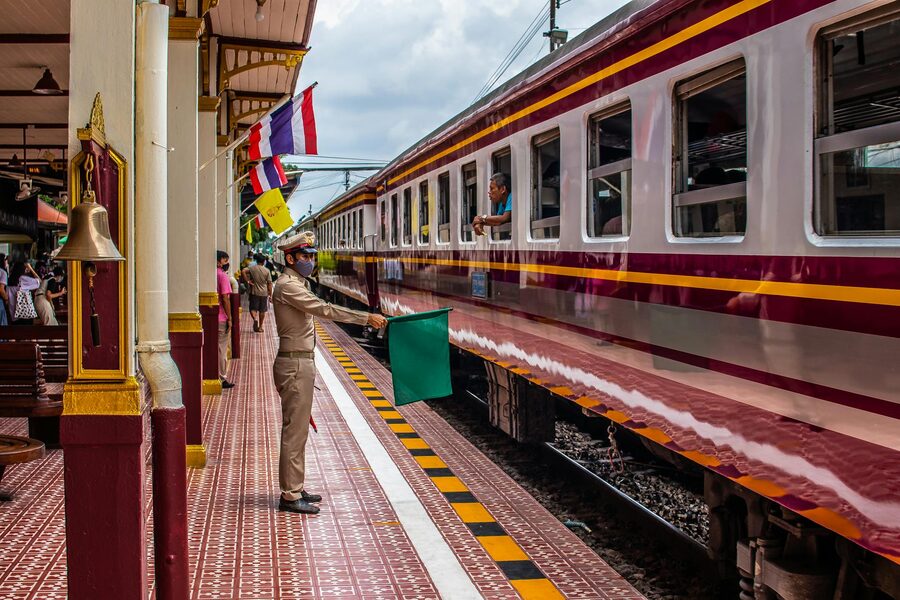
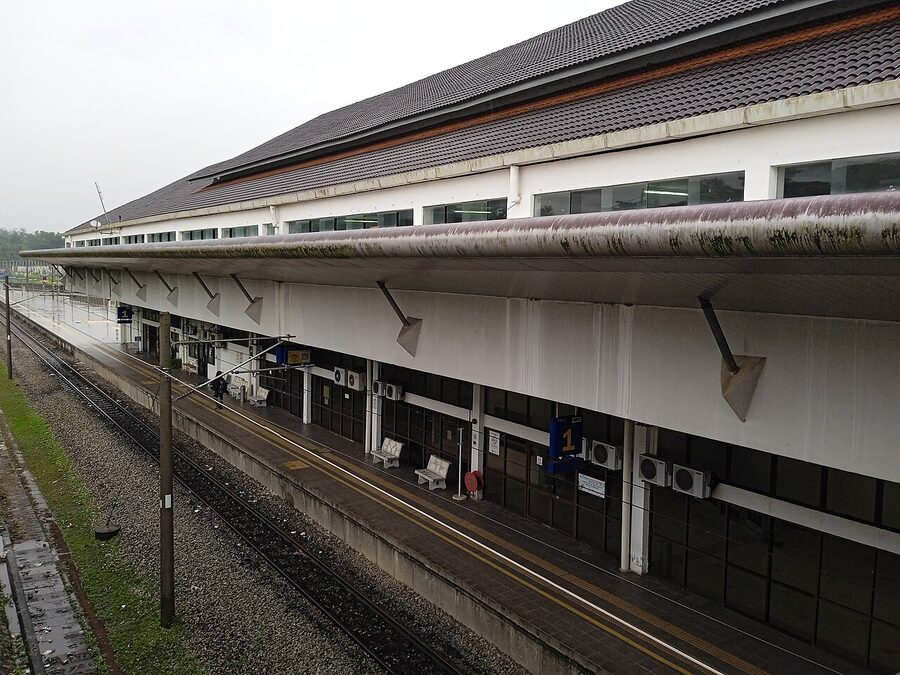
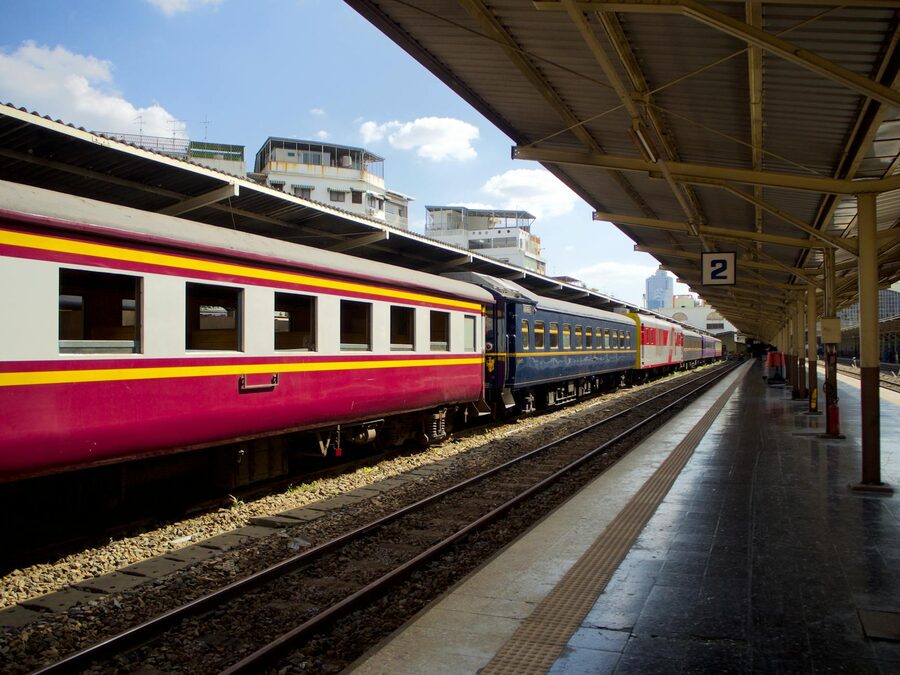
The single calmest version of this border is by train at Padang Besar. The town sits exactly on the border, with the Thai station on one side and the Malaysian station fifty metres away on the other. Both Thai State Railways (SRT) and Malaysia’s KTM operate services that meet here. You walk through immigration inside the station building, with the Thai exit-stamp counter and the Malaysian entry desk in the same hall. A cup of coffee on the platform on the Thai side, immigration takes maybe twenty minutes, and you are on a different country’s train.
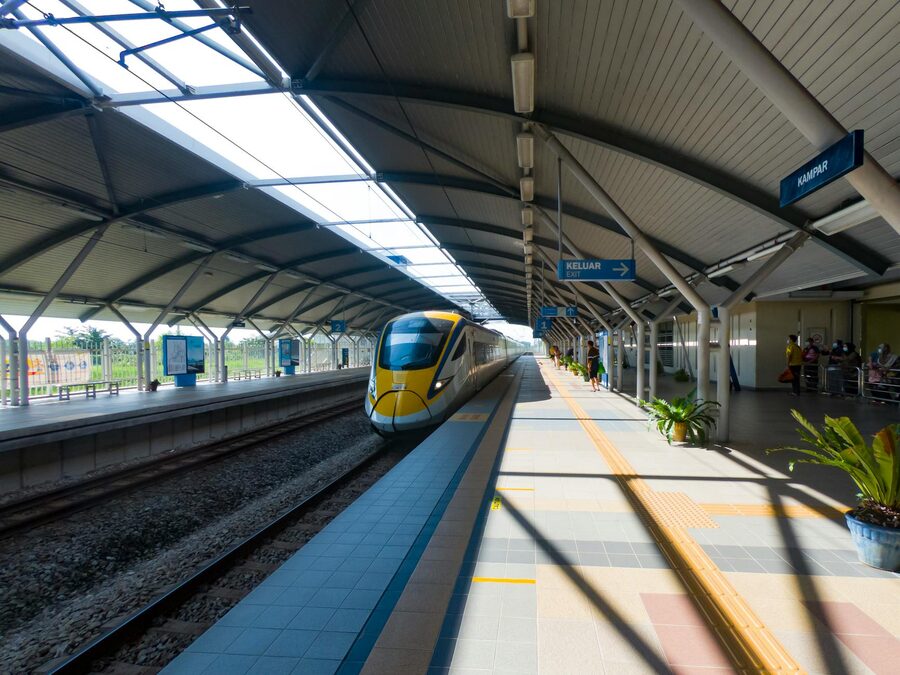
The route works in either direction. Coming north out of Malaysia, you can take a KTM ETS service from KL Sentral to Butterworth (the mainland railhead opposite Penang, around four to four and a half hours), change to the cross-border shuttle to Padang Besar (around an hour), and pick up the SRT southbound train into Thailand from there. Coming south out of Thailand, you are usually arriving at Padang Besar from Hat Yai (about an hour by SRT) and continuing south on KTM. Day services and overnight services both exist, though schedules have shifted multiple times in recent years and should be checked before you commit. Seat 61 (seat61.com) keeps the most reliable consolidated timetable.
The old Bangkok-to-Singapore international express train is no longer a single through-service. It was suspended around 2017 and what remains is a network of connecting trains that meet at Padang Besar. You can still do Bangkok to Singapore by rail, but it is at minimum a two-day trip with at least one and usually two changes.
Sadao / Bukit Kayu Hitam: the road crossing
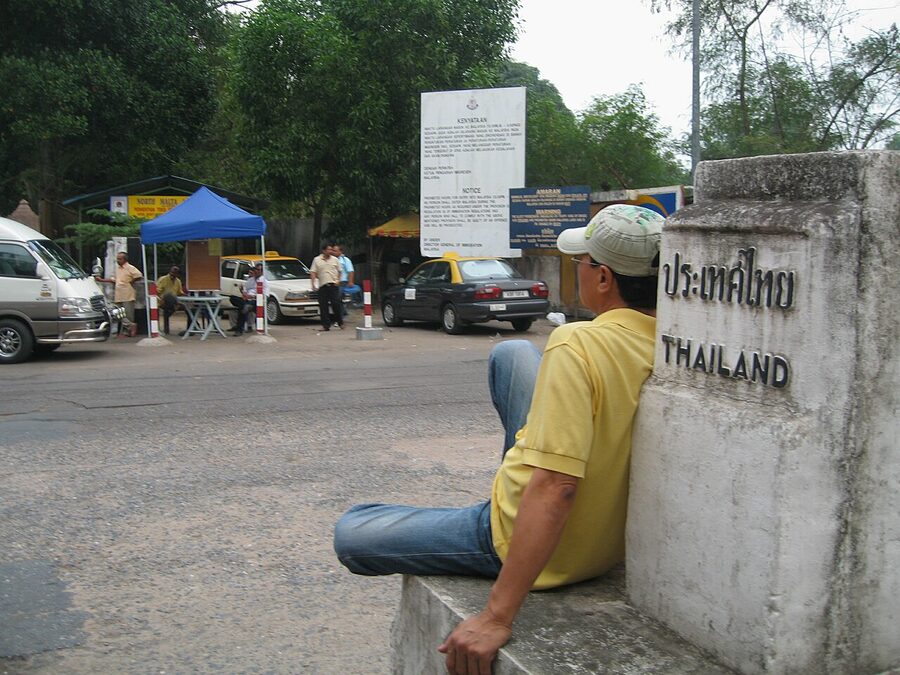
Sadao on the Thai side and Bukit Kayu Hitam on the Malaysian side make up the busiest road crossing on the border. This is the one most buses take, and it is the practical option if you are not going by train. From Hat Yai (Thailand) you can catch a direct bus to Penang (around four hours, roughly 800 baht or twenty US dollars), Kuala Lumpur (eight or nine hours), or Kuala Perlis. EasyBook and 12Go are both reliable booking tools.
The crossing itself is a standard land border. You exit the bus on the Thai side, walk through Thai immigration, walk out and across a short pedestrian section into the Malaysian terminal, walk through Malaysian immigration, and rejoin your bus on the other side. Allow forty-five minutes to an hour for the full transit, longer at weekends and during local festival periods. Buses typically wait for the slower passengers, but be efficient and move with the queue.
The bus from George Town in Penang to Hat Yai goes the other way for the same reasons. EasyBook lists buses from around 100 ringgit for two people (about twenty US dollars), departing several times a day from either the Sungai Nibong terminal or the convenient Greenlane McDonald’s pick-up. Five hours, depending on the queue at the border.
For longer legs, sleeper buses run overnight from Bangkok directly to Kuala Lumpur (around eighteen to twenty hours, roughly forty US dollars). I would not recommend the through-bus over breaking the journey at Hat Yai or Penang; the gain is one travel day, the cost is sleeping sitting up across two countries’ immigration at three in the morning.
Tak Bai: the boat crossing
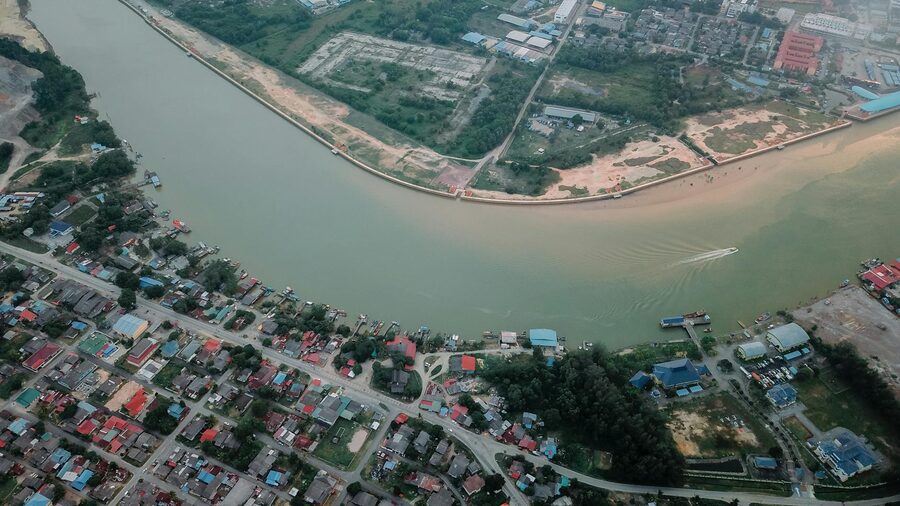
Tak Bai is the slow-traveller option. The crossing happens by small wooden ferry across the Sungai Golok river between the Thai town of Tak Bai and the Malaysian town of Pengkalan Kubor. From the Malaysian side it is a short distance from Tumpat, the northern terminus of the Malaysian east-coast railway. From the Thai side it is in southern Narathiwat Province, which carries the foreign-office advisory mentioned above.
The traveller experience: you arrive at Tak Bai by songthaew or local bus, walk to the riverside immigration post (open roughly seven in the morning to ten at night, but check), get your Thai exit stamp, take a short boat across (around 50 baht), and clear Malaysian immigration on the other side. From Pengkalan Kubor, a taxi or local minibus takes you to Tumpat or Kota Bharu. The total cost is well under ten US dollars and the experience is unique to this corner of southeast Asia.
Use this crossing if you are travelling slowly, if you are aiming for the east coast of peninsular Malaysia (the Perhentian Islands, Kota Bharu, Kuala Terengganu), or if you are continuing south by the slower KTM intercity service. Do not use it if you are time-constrained or if you have any reason to reconsider the southern-province advisory; the western crossings are simpler and faster.
The digital paperwork: TDAC and MDAC
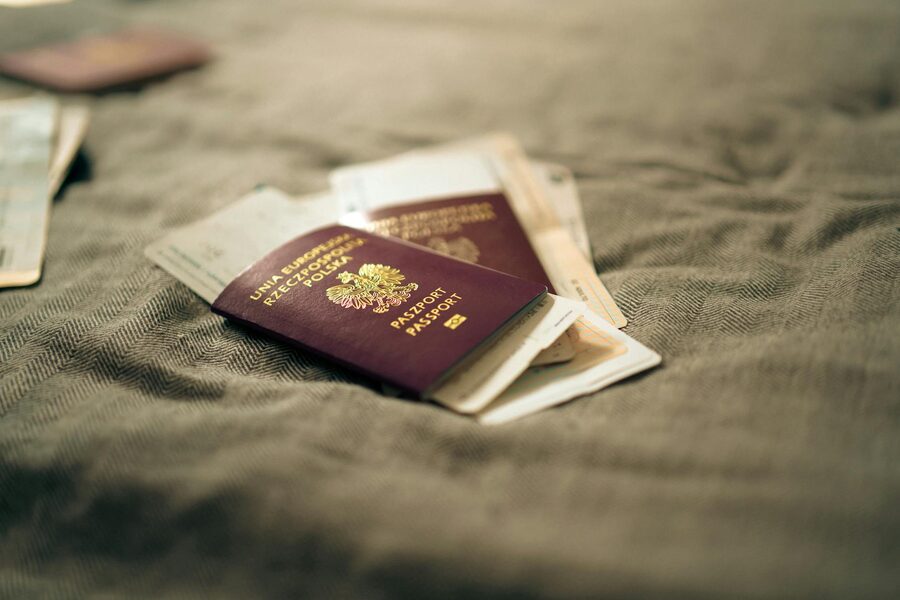
Both countries have moved to digital arrival cards in the last few years and the paper version is gone for non-residents. You will need to fill in:
TDAC (Thailand Digital Arrival Card). Required for everyone entering Thailand by air, land, or sea. Submit at tdac.immigration.go.th up to three days before arrival. You get a QR code that you show at immigration. The form takes about ten minutes if you have your passport and onward travel details ready. There is no cost; ignore any third-party site that asks for a fee.
MDAC (Malaysia Digital Arrival Card). Required for foreigners entering Malaysia. Submit at imigresen-online.imi.gov.my within three days of arrival. Same shape: passport, address in Malaysia, onward travel. Same warning about scam sites.
Fill both in before you reach the immigration counter, ideally before you board the bus or train. Wifi at the border posts is not reliable. The bus drivers do not wait for paperwork stragglers.

Visas, currency, time zone, SIMs
For most Western passport holders (UK, US, Canada, Australia, EU, etc.):
Thailand offers visa-free entry for stays up to 60 days as of 2024-2026, with the option to extend by 30 days. The 30-day historical limit is gone for many nationalities but check before you travel because the rules have shifted twice in the last three years.
Malaysia offers visa-free entry for stays up to 90 days for the same nationalities. The 90-day stamp comes for free at immigration; nothing to apply for in advance.
Currency: Thai baht (THB) on the Thai side, Malaysian ringgit (MYR) on the Malaysian side. ATMs are plentiful in Hat Yai, Penang, and KL. The currency exchanges at the border itself give the worst rates of the trip; change a small amount if you need bus fare and use ATMs in town. Small US dollar notes are useful as a backup.
Time zone: both countries are on UTC+7 to UTC+8 split. Thailand is UTC+7, Malaysia is UTC+8. You lose an hour going south, gain it going north. Buses and trains usually display Malaysia time on their schedules once you are in Malaysia, so a 16:00 departure from Padang Besar means 17:00 Malaysian time which is when the Malaysia-side schedule will list it.
SIM cards: AIS and TRUE-H in Thailand, Maxis or DiGi in Malaysia. Tourist SIMs are cheap (around five US dollars for seven days with generous data) and available at any 7-Eleven in Hat Yai or any major station in Malaysia. Or use an eSIM (Airalo, Holafly) and skip the queue.

Best routes by trip type
The right crossing depends on where you are starting and where you are going. The decision table for the most common trips:
| Trip | Best route | Time | Approx cost |
|---|---|---|---|
| Bangkok → Penang | Train Bangkok-Hat Yai overnight, then SRT Hat Yai-Padang Besar, KTM shuttle to Butterworth | 22-26 hours total | $45-70 USD |
| Bangkok → Kuala Lumpur | Train via Padang Besar (above) then ETS Butterworth-KL Sentral | 26-30 hours | $55-90 USD |
| Hat Yai → Penang | Direct bus via Sadao | 4-5 hours | $15-25 USD |
| Phuket → Penang | Bus via Hat Yai then bus via Sadao, OR fly direct (sometimes cheaper) | 14-16 hours overland | $30-50 USD |
| Penang → Krabi or Phuket | Bus via Sadao to Hat Yai, then minibus onward | 8-10 hours | $25-40 USD |
| Slow trip via east coast | Tak Bai-Pengkalan Kubor boat, then KTM south | 2-3 days with overnights | $20-35 USD core costs |
Bus and train operators sometimes change schedules with limited notice, especially around Thai and Malaysian public holidays. Book one or two days ahead during peak season (December, Chinese New Year, mid-April), and on the day for off-peak.
Bangkok to Penang in detail
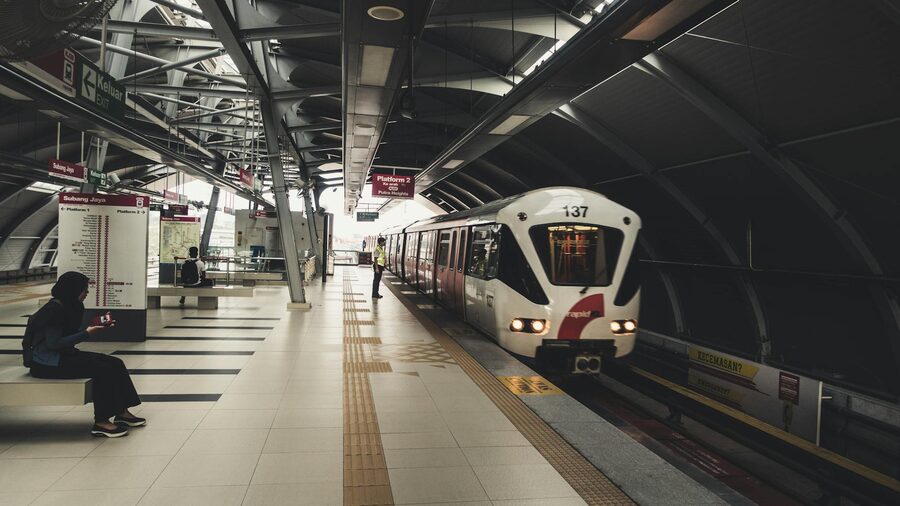
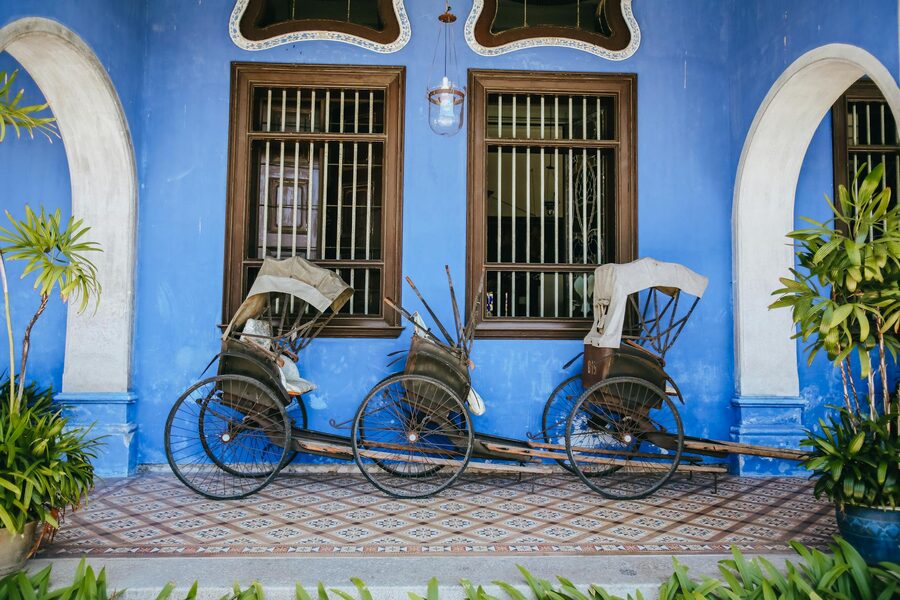
The Bangkok-to-Penang overland route is the classic version of this border, and it is one of the most rewarding train trips in southeast Asia if you do it the right way.
Day 1 (Bangkok afternoon). Take the SRT train from Bangkok’s Krung Thep Aphiwat or Hua Lamphong (depending which platform Hua Lamphong has been demoted to in any given month). The number 35 (the Spec Diesel Express to Hat Yai) and the number 31 (sleeper) are the standard southbound options. Departure is usually mid-afternoon, arrival in Hat Yai is around six in the morning the next day. The sleeper is well worth the ~$45 second-class fare for the bed and the breakfast call.
Day 2 (Hat Yai morning). Breakfast in Hat Yai. The 09:30 SRT shuttle to Padang Besar is the connecting service for KTM. Padang Besar arrival around 10:45. Walk through immigration in twenty minutes. KTM shuttle to Butterworth (Penang’s mainland terminal) leaves Padang Besar around 12:30 and takes about an hour and forty minutes. Cross the harbour to George Town on the ferry (still running, still cheaper than the bridge bus, twenty minutes).
Day 3 (Penang). Sleep in. Eat. The Bangkok-to-Penang trip earns its place specifically because you arrive in Penang having seen the country shift around you, and the city’s food culture is the best place in southeast Asia to recover from twenty-six hours of trains.
If you have less time, the alternative is a single overnight bus from Bangkok to Penang via Sadao. Faster on paper (around eighteen hours), worse in practice. Sleeping on a bus across two immigrations is harder than two trains.
Penang to Bangkok and the slow alternative
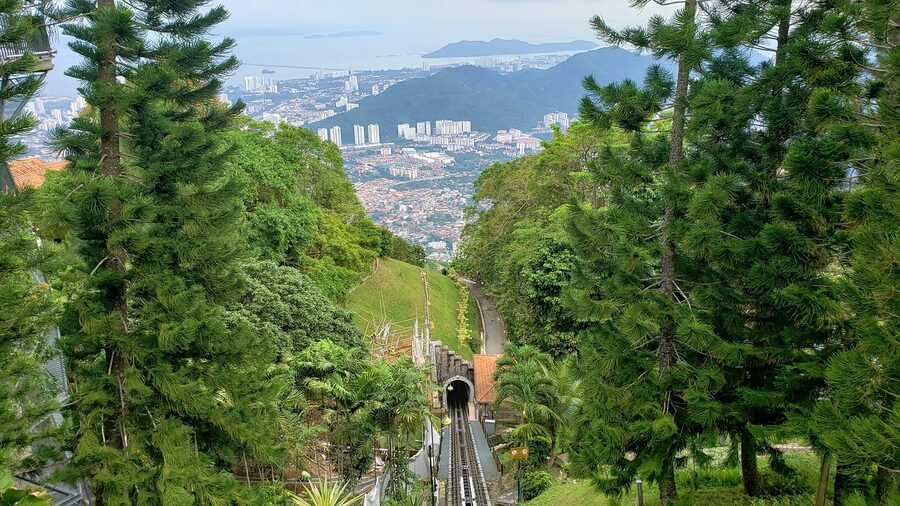
Going north works the same way in reverse, but with a quirk: the cross-border ETS shuttle from Butterworth runs a different schedule from the Padang Besar trains, so the timings rarely line up cleanly. The standard combination has you starting at KL Sentral or Butterworth in the morning, reaching Padang Besar by mid-afternoon, taking the SRT to Hat Yai, and breaking the journey there for the night. Pick up the SRT sleeper to Bangkok the following evening for an overnight to the capital.
For travellers running a longer Southeast Asia loop, this is also the natural moment to consider the alternative entry point into Thailand: go to Kota Bharu on Malaysia’s east coast (perhaps after a few days on the Perhentian Islands), cross at Tak Bai, and continue up the east-coast Thai rail line. The route is slower, the experience is rawer, and the islands en route are some of the best beaches in the region.
Hat Yai in twelve hours
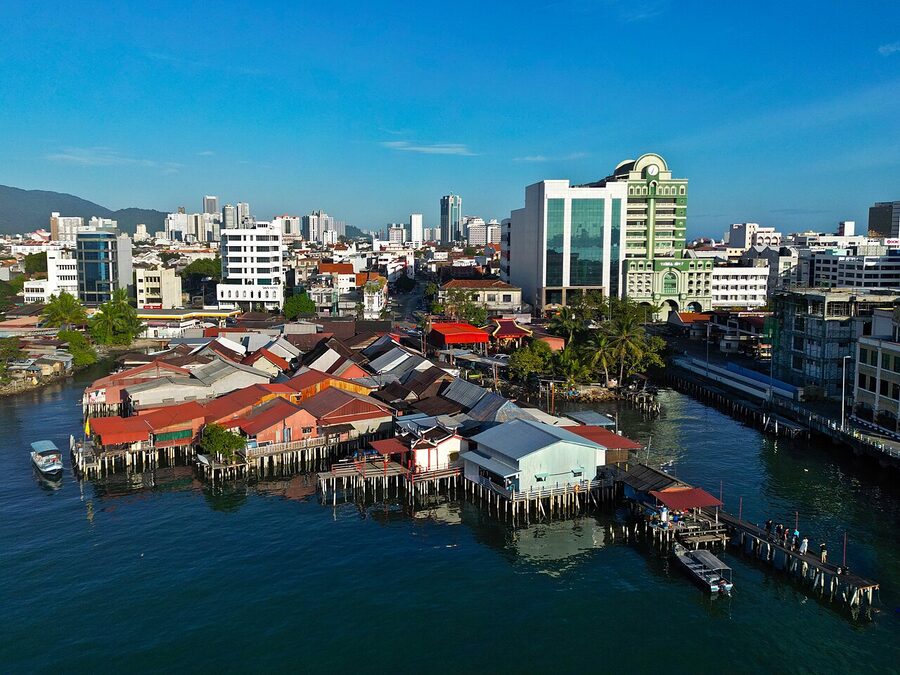
Most travellers stop in Hat Yai for one night before or after the border. The town has a reputation among foreign visitors as a transit stop and that is what most people make of it. The fuller version of the visit looks like this.
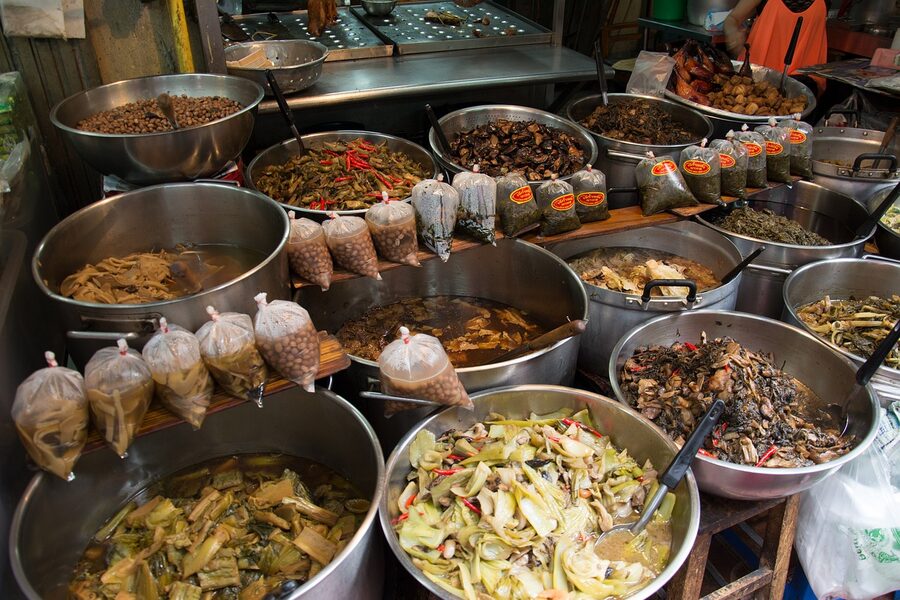
Afternoon arrival. Drop bags. The Hat Yai night markets (Greenway and Asean Trade Center) are the obvious target if you arrive in the late afternoon. Local Hat Yai chicken (kai tod) is the dish to find; the original Decha branch on Niphat Uthit 3 is the local pick.
Evening. Hat Yai is a serious food city. The southern Thai cuisine is closer to Malay food than to Bangkok food, with curries that lean toward turmeric and coconut and seafood that points south to the Andaman. Khao mok gai (a southern Thai chicken biryani-style dish) is the test. The night markets are open until eleven.
Morning. Hat Yai has small but real attractions: Wat Hat Yai Nai (the temple with the third-largest reclining Buddha in the world, if you trust the local tourism board), the Greenway Night Market in its daytime form, and the cable car up Khao Khohong for the city view. None of them takes more than an hour.
If you are crossing south, this fits your last evening in Thailand cleanly. If you are crossing north, this fits your first evening back in Thailand. Either way, an evening in Hat Yai is a much better trip than a hotel-room-and-station that most travellers settle for.

What about flying instead?
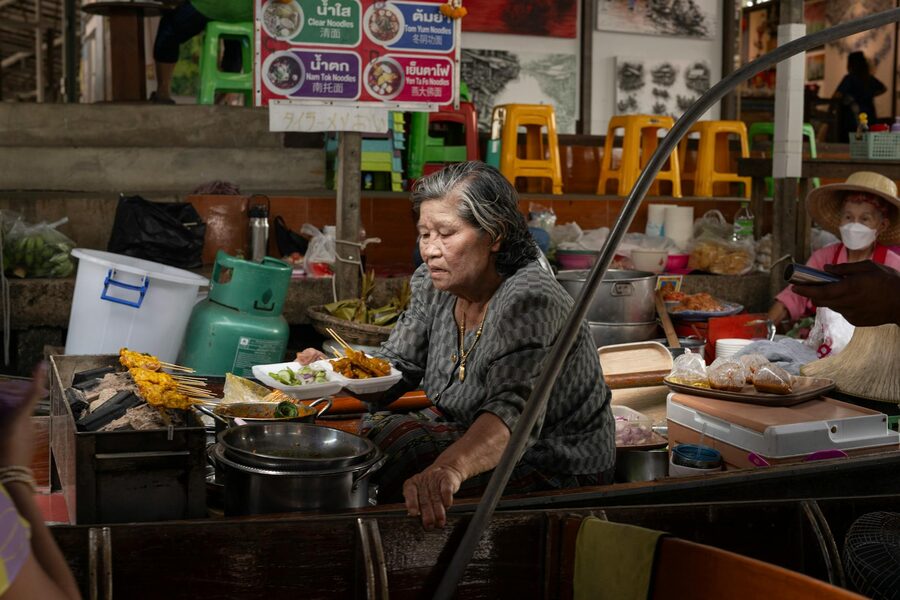
The simple answer is that flying is sometimes faster and rarely meaningfully more expensive. AirAsia, Firefly, and Malaysia Airlines fly Bangkok-Kuala Lumpur multiple times a day, with fares typically running fifty to ninety US dollars one way if booked a week or two ahead. Bangkok-Penang and Hat Yai-Penang are also direct on AirAsia and Firefly. The flight time is two hours; the airport-to-city total is closer to five.
The case for the train: it is the experience, not the transport. The case for the bus: it is the cheapest option on the day. The case for the plane: it is the right answer if you have less than five days to do peninsular Malaysia and you have already done the overland route once.
Most experienced southeast Asia travellers I know do the trip overland once and fly thereafter, and that is fine. The first time is the trip. The fifteenth time is admin.

The wider Southeast Asia overland loop
The Thai-Malay border is one leg of the bigger Southeast Asia overland route. Most travellers who cross here are on a longer arc that runs Singapore → Malaysia → Thailand → Cambodia → Vietnam’s Mekong Delta → Vietnam north → Laos → Thailand → Malaysia → Singapore (or the reverse). The whole loop takes a minimum of three weeks and rewards twice that. The Thai-Malay crossing typically falls at the start or end of the loop depending which way you run it.
Whichever direction, the Southeast Asia dry-season window from late November through to early March is when the route is at its easiest. The monsoon rains in May through October complicate the eastern Malaysian coast and the inland routes through Laos and northern Vietnam. December and January are the best two months in the year for this route.
If you want the route built for you rather than figured out as you go, a tailor-made tour across multiple Southeast Asian countries is one option, particularly for travellers who want hotel bookings handled and a guide on call when needed. The DIY version is meaningfully cheaper and arguably more interesting; the tour version is faster and lower-friction.
Common mistakes
Five things that catch first-time crossers:
Submitting the digital arrival cards too late or too early. Both TDAC and MDAC have a three-day window. Submit on the morning of travel and you are fine. Submit a week ahead and the form expires. Submit at the immigration counter and you have a problem because the wifi is poor.
Over-relying on Sungai Kolok or Tak Bai. The east-coast crossings are real and they work, but the foreign-office advisory for the four southernmost provinces is a real consideration. If you are travelling solo, with limited time, or with travel insurance that excludes high-risk regions, take Padang Besar or Sadao instead.
Buying bus tickets at the border. The drivers and touts at the Sadao crossing will offer you onward minibus or taxi services at considerably above market rates. Book your Hat Yai or Penang onward leg before you arrive at the border via 12Go, EasyBook, or directly with the bus operator.
Underestimating the time-zone shift. Thailand UTC+7, Malaysia UTC+8. A 14:00 train from Padang Besar is a 15:00 train by Malaysian time. Set your watch when you cross.
Skipping Hat Yai. Hat Yai is most travellers’ overnight stop before or after the border, and it is mostly treated as a transit town. It is also a serious food city in its own right (the southern Thai-Muslim cuisine is a different world from Bangkok), worth a real evening rather than just a hotel-and-station.
Booking the same-day onward connection too tight. The cross-border legs (SRT shuttle to Padang Besar, KTM shuttle to Butterworth) run on schedules that have shifted multiple times in the last five years. Travellers who try to make a same-day connection from the morning Bangkok train onward to KL Sentral on the same day occasionally miss it. If you have any flexibility, plan for an overnight in Hat Yai or Penang on the way south. The crossing is not the day you should also be doing six hours of onward travel.
Money, ATMs, and the small details
The single biggest practical headache at this border is not immigration; it is the ATM-and-fee combination on travel day. The Thai-side ATMs charge a flat 220 baht per withdrawal in 2026 (around six US dollars) regardless of your home bank, and the Malaysian banks usually do not. The implication: get cash on the Malaysian side rather than the Thai side when you can plan ahead. Your travel-friendly debit card (Wise, Revolut, Charles Schwab, Monzo, depending on country) works at most ATMs. Charles Schwab refunds the foreign-ATM fee at the end of the month, which makes it the best card I have used for southeast Asia travel.
The border itself has a few money exchanges with consistently bad rates. The Hat Yai bank ATMs at the bus station are a better choice for picking up Thai baht; the AmBank, CIMB, and Maybank ATMs at any Malaysian station are the better choice for ringgit. Carry around twenty US dollars in small notes as backup; some east-coast crossings are still cash-on-the-spot.
Other small details: Thailand still uses the older square-pin plug standard alongside the more common types A and C, so a multi-region adaptor is useful. Malaysia uses type G (the British three-pin); UK travellers have nothing to do, everyone else needs an adaptor. Drinking water is bottled or filtered on both sides; the public tap water is not safe to drink as is.
Practical timings
Approximate door-to-door timings on the routes most travellers actually do:
- Hat Yai bus to Penang via Sadao: 5 hours including border
- Hat Yai SRT shuttle to Padang Besar: 1 hour
- Padang Besar ETS shuttle to Butterworth: 1 hour 40 minutes
- Butterworth ferry to George Town: 20 minutes
- KL Sentral to Butterworth (ETS Gold): 4 hours 15 minutes
- KL Sentral to Padang Besar (ETS): 5 hours 30 minutes (rare service)
- Bangkok to Hat Yai overnight sleeper: 16 hours
- Singapore Woodlands to JB Sentral and onward by KTM: half day to KL
None of these timings are guaranteed and all of them are realistic on a normal travel day with no major holiday delays. Add half an hour at peak periods and during school holidays.

The verdict
The Thai-Malay border is one of the more travellable land borders in Asia. The paperwork is digital, the buses run frequently, the trains connect cleanly at Padang Besar, and the food on either side rewards the trip. Pick the right crossing for the trip you are actually doing rather than the one a forum thread told you about, fill in the digital arrival card on the morning of travel, and let the crossing be a small adventure rather than the central event of the day. Most travellers I know who have done this border twice say the second time was easier than the first by a long margin. The first one is supposed to be a small adventure. Treat it as one.