

The Northern Lights cannot be promised. Every Iceland operator who tells you they “guarantee” a sighting is either lying or selling you a definition of “guarantee” that does not include the lights actually appearing. The aurora is statistical, not scheduled, and the difference between a successful Iceland aurora trip and a wasted one is whether the visitor accepts that difference before booking. This guide is what the visitor centres do not put on their brochures.
Below: what the lights actually are in two short paragraphs, what the season and the time of night really do for your odds, what the KP-index numbers mean for an Icelandic latitude, where to base yourself, how to chase, and the multi-night strategy that turns a 30 percent single-night chance into a 90 percent week.
In This Article
- What you are looking at
- The season window
- The time of night
- The KP-index, in plain English
- Where solar cycle 25 puts you
- Where to base yourself
- How to chase: the four shapes
- The multi-night strategy
- The off-season Iceland trade
- Reading the Met Office forecast
- What to wear
- Photography, briefly
- Common mistakes
- What it costs in 2026
- The view
What you are looking at
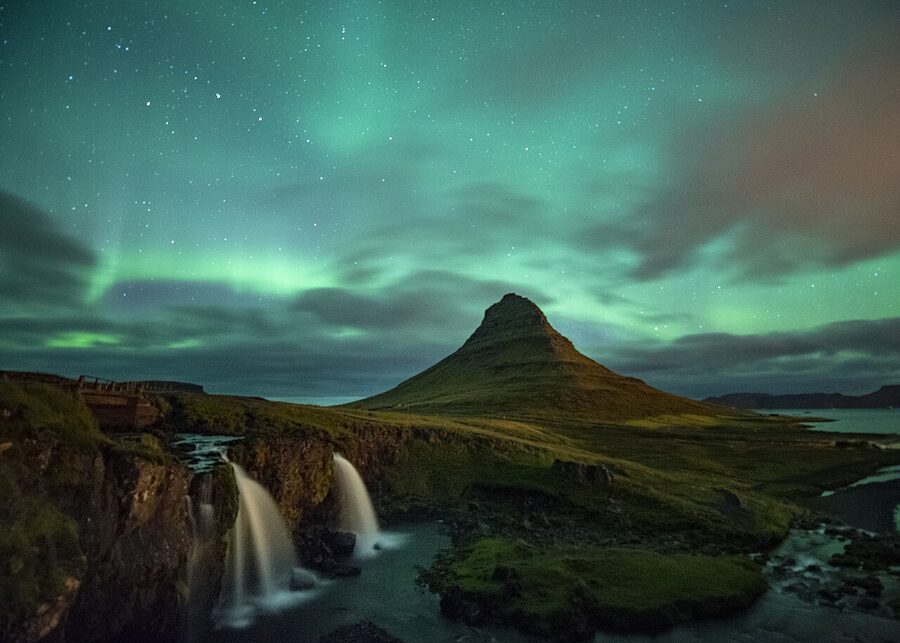
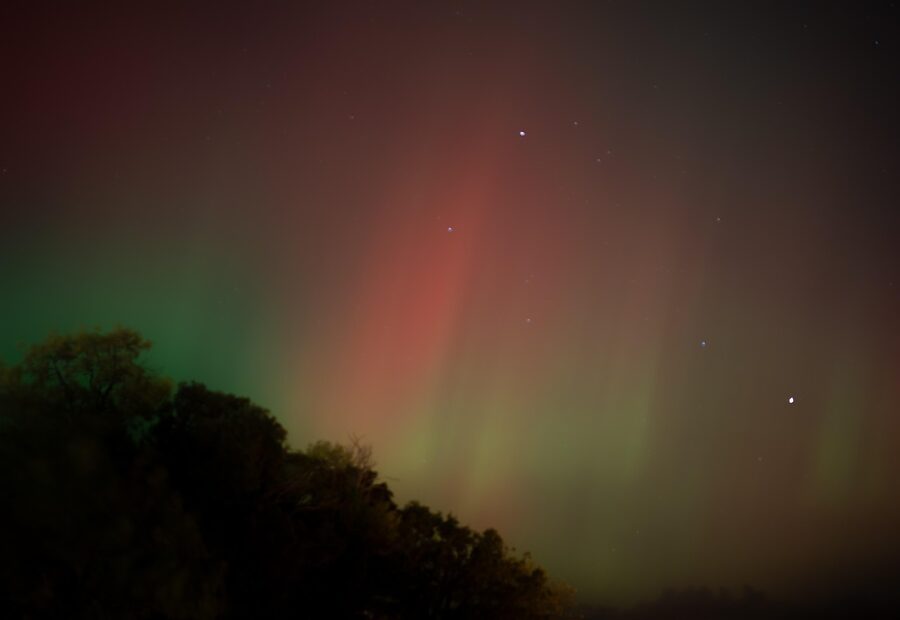
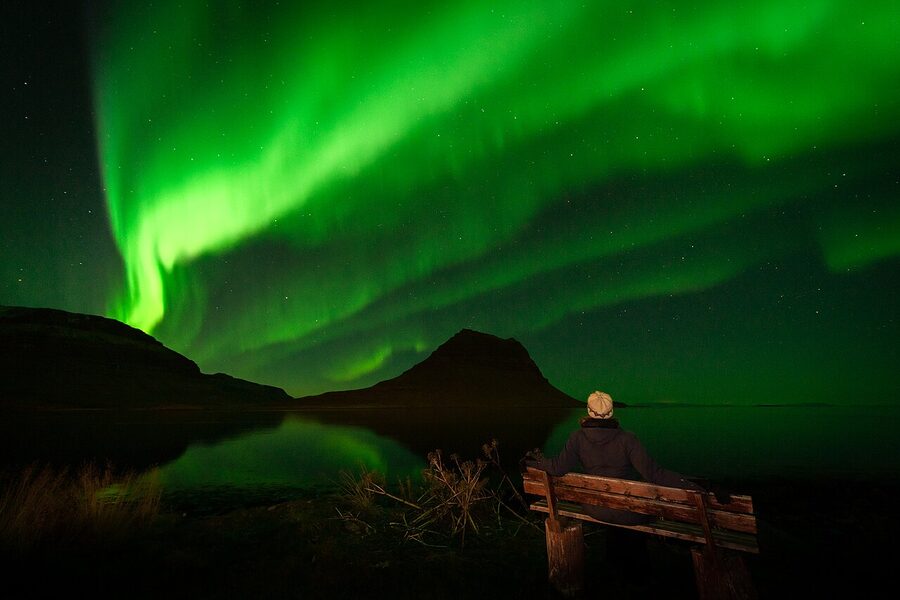
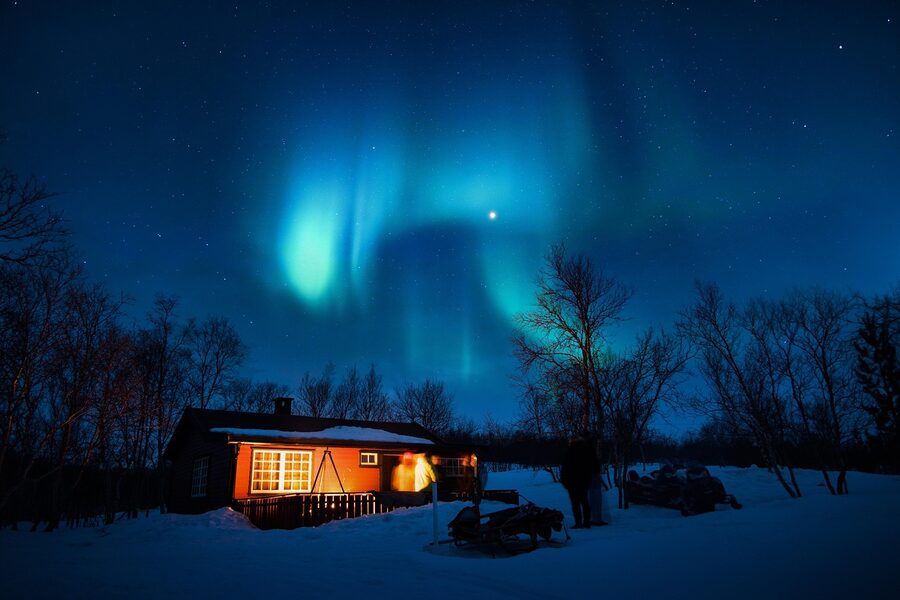
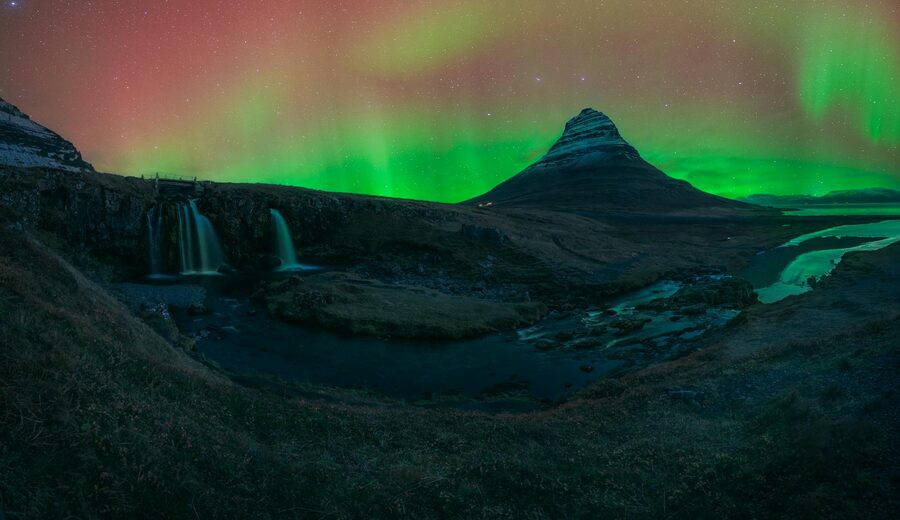
The aurora borealis is solar wind hitting the upper atmosphere. Charged particles from the sun stream out continuously; Earth’s magnetic field deflects most of them, but funnels some down toward the poles where they collide with oxygen and nitrogen molecules between roughly 100 and 300 kilometres up. The collisions release light: green from oxygen at lower altitudes (the dominant colour), red from oxygen higher up, blue and purple from nitrogen. The display occurs in a roughly oval band centred on the magnetic pole. Iceland sits at about 64 degrees north geomagnetic latitude, which puts it inside the typical auroral oval most clear nights.
The two facts that matter for visitors: you need dark sky and you need solar activity strong enough to push the oval over your viewing position. The first is a calendar question. The second is a forecasting question. Most aurora trips fail on one or the other, sometimes both.

The season window
Iceland’s aurora season runs from roughly late September through early April. The window is set by the country’s daylight cycle: from late April through to late August the sky north of Reykjavik does not fully darken even at midnight, and aurora that may technically be present is invisible against the sustained twilight. By late September the nights are dark enough for sightings; by April the nights are short enough that the window closes again.
Within that window, the country’s daylight differs sharply month-to-month. Around the December solstice, Reykjavik gets roughly four hours of usable daylight; the surrounding sky is dark for nearly twenty. By late February, daylight is back to about ten hours but the nights are still long and cold enough for aurora hunting. October and March bookend the window with longer-evening light and milder temperatures.
The shoulder months at either end of the window (late September through early November, mid-February through early April) are arguably the better windows. Weather is more workable, daylight enough that the rest of the country is still meaningfully visitable during the day, and the aurora is still in season. Mid-winter (December and January) gives you the longest dark hours but pays for it with the worst weather and the shortest practical day-trip lengths.
The time of night
The aurora itself does not have a clock. The Earth’s geomagnetic activity is unrelated to local time. But the practical viewing window is. The lights are usually most active a few hours after sunset and through midnight, with the highest sighting density between roughly 21:00 and 02:00. This is not because the aurora is more active then; it is because the contrast between the displays and a fully dark sky is best when the sun is furthest below the horizon, and that is what local midnight gives you.
The implication for trip planning: an early-evening tour that starts at 19:00 and ends at 22:00 covers only the lower-probability portion of the typical viewing window. The serious aurora tours run 21:00 to 02:00 or 03:00. If you find a tour that promises to “be back by 23:00”, it is a tour for travellers who want the experience without the late nights, and it has correspondingly lower sighting odds.
The KP-index, in plain English
The KP-index is the standard global measure of geomagnetic activity. It is a quasi-logarithmic scale running from 0 to 9, calculated from magnetometer readings every three hours. The Icelandic Meteorological Office (vedur.is) publishes its own forecast on the same 0-9 scale, derived from international space-weather data, and overlays it with a cloud-cover forecast so visitors can see both numbers in one place.
For Iceland’s latitude, the practical thresholds are:
| KP value | What it means for Iceland |
|---|---|
| 0–1 | Quiet. The auroral oval is north of Iceland; sightings unlikely except as a faint glow on the northern horizon. |
| 2–3 | Moderate. The oval sits over Iceland. Reasonable odds of a visible display in the dark countryside; harder from light-polluted Reykjavik. |
| 4–5 | Active. Strong overhead displays likely; visible from Reykjavik on a clear night. |
| 6–9 | Storm. Aurora visible far south of Iceland; in Iceland itself the display fills the sky in motion. |
For practical visitor planning, KP-2 or higher with clear skies is enough for a real chance. Iceland’s value is that it sits high enough on the geomagnetic-latitude scale that a KP-2 night in Iceland is a sighting opportunity, while the same night in Edinburgh or New York shows nothing. The country is, in a sense, default-aurora-territory; what changes night to night is the cloud and the storm intensity.
Where solar cycle 25 puts you
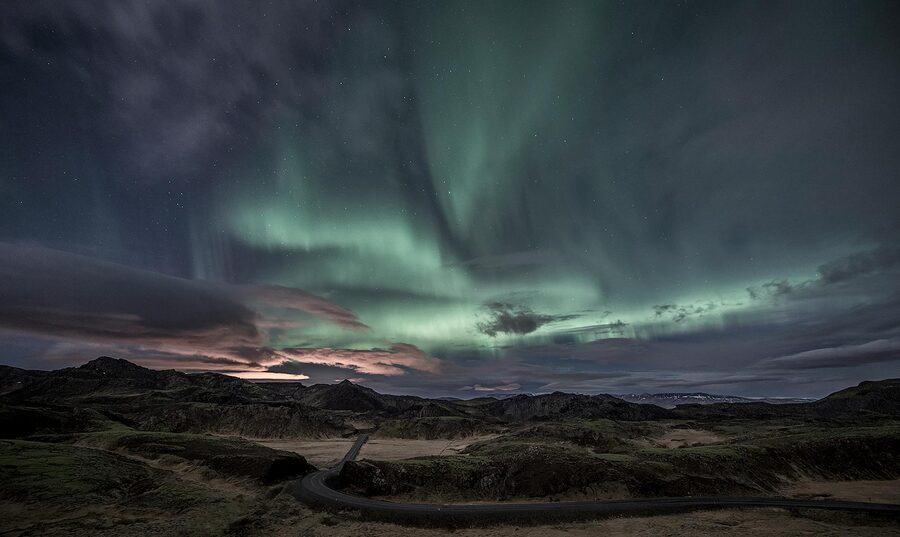
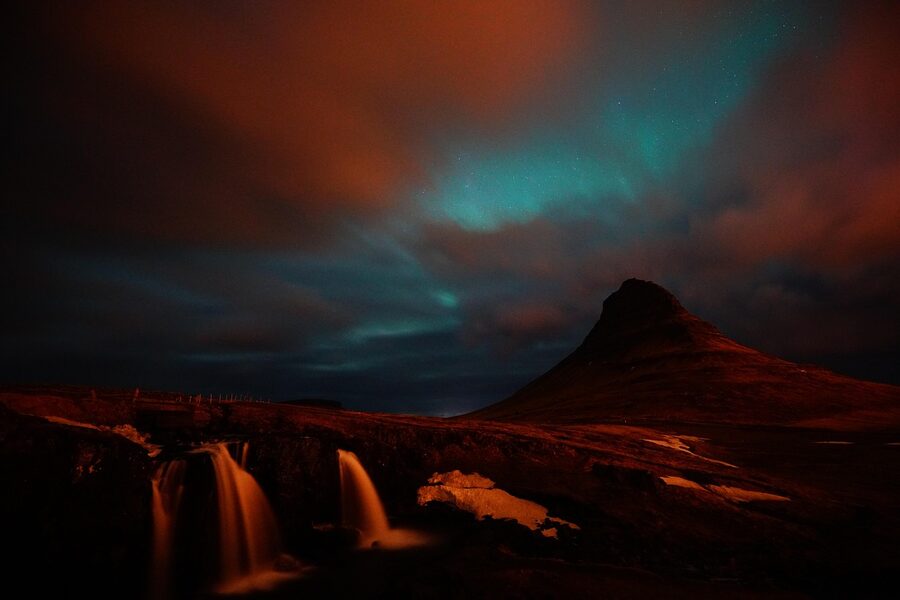
The 11-year solar cycle peaked in October 2024 (NOAA-confirmed maximum, smoothed sunspot number of 161, the strongest peak since the 1990s). Iceland trips during 2025-2027 are therefore happening in the post-peak phase of an unusually strong cycle, which means above-average aurora activity for the next two to three years before the cycle starts to wind down toward minimum around 2030.
What this means in practice: a 2026 or 2027 Iceland trip is, statistically, a better-than-baseline aurora trip. The cycle’s tail-off years (the post-maximum two to three) often produce stronger storms than the peak itself because of the geometry of how solar coronal holes interact with Earth. If you have been planning the trip for “someday”, someday is approximately now.
Where to base yourself
The decision is whether to chase from Reykjavik (with night excursions out into the country) or to base outside the city in genuinely dark territory. Both work; they suit different trip shapes.
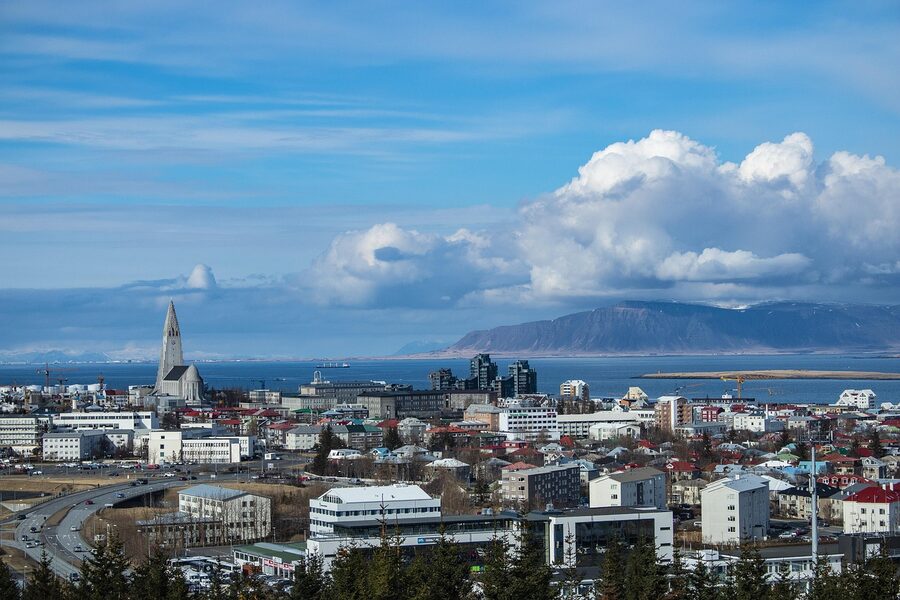
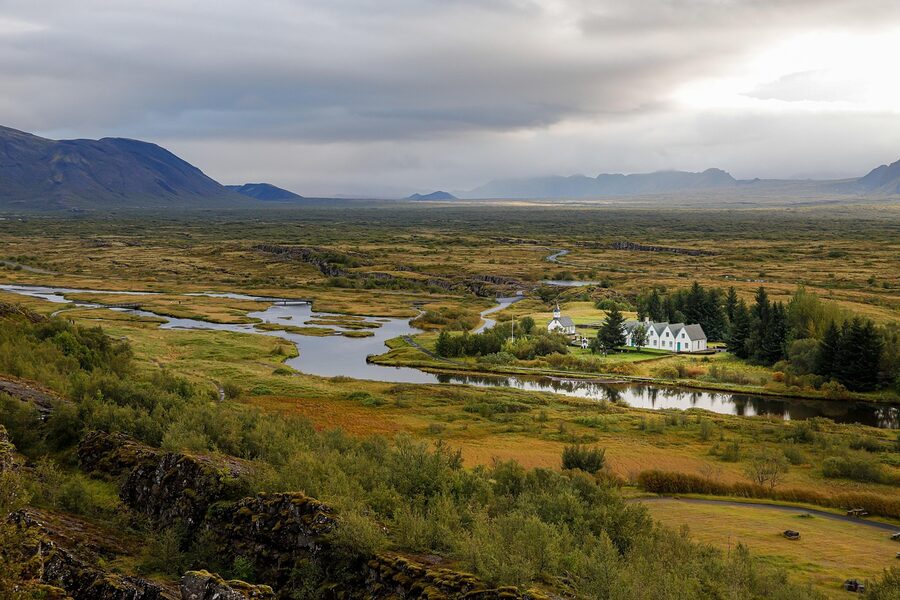
Reykjavik base. The capital has the country’s only meaningful concentration of restaurants, bars, museums, and indoor activity (the layout of the centre is in Reykjavik Is Smaller Than the Map Makes It Look). Aurora chasing from here means a 60- to 90-minute drive (or coach ride) out into Þingvellir, the Reykjanes peninsula, or southward toward the Hellisheiði highlands to clear the city’s light pollution. Reykjavik itself does see aurora on strong nights (KP-4 plus, clear skies) but the city’s sodium-vapour streetlights wash out anything weaker. The main practical advantage of basing in Reykjavik is that you can do everything the city offers during the day and drive out at night; the disadvantage is you are doing the drive every night you chase.
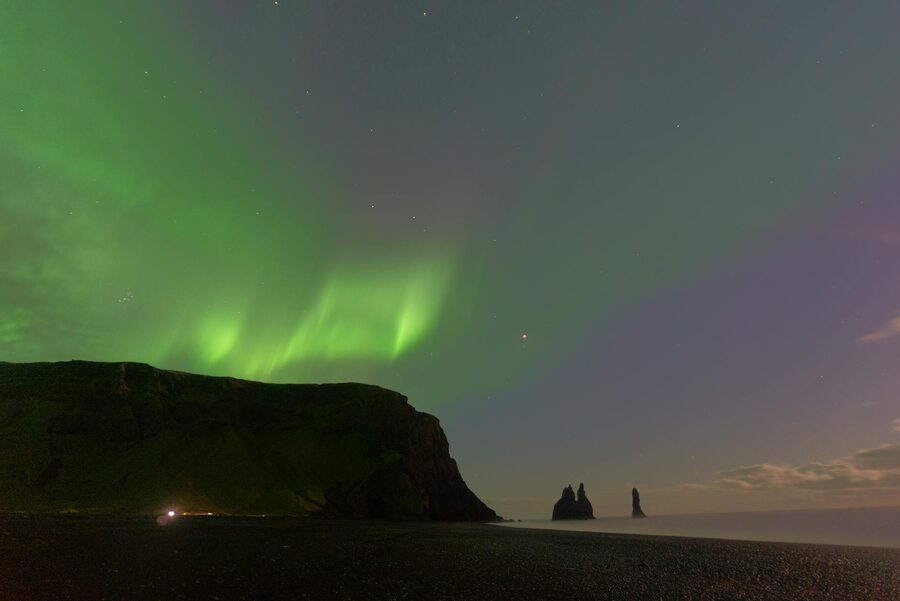
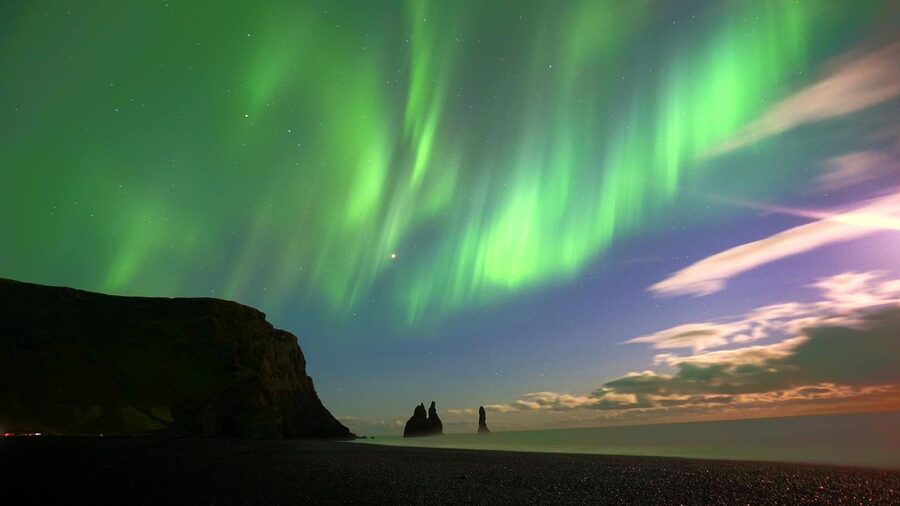
South Coast base. Towns like Vík, Hella, or the Hvolsvöllur area put you in the dark countryside two hours south-east of Reykjavik. Aurora chasing here means stepping out of your hotel rather than driving anywhere. South Coast bases also pair with the south coast’s daytime sights (Skogafoss, Reynisfjara, Sólheimajökull glacier walks). For travellers who want the most aurora opportunity per night-of-trip, this is the strategic base.
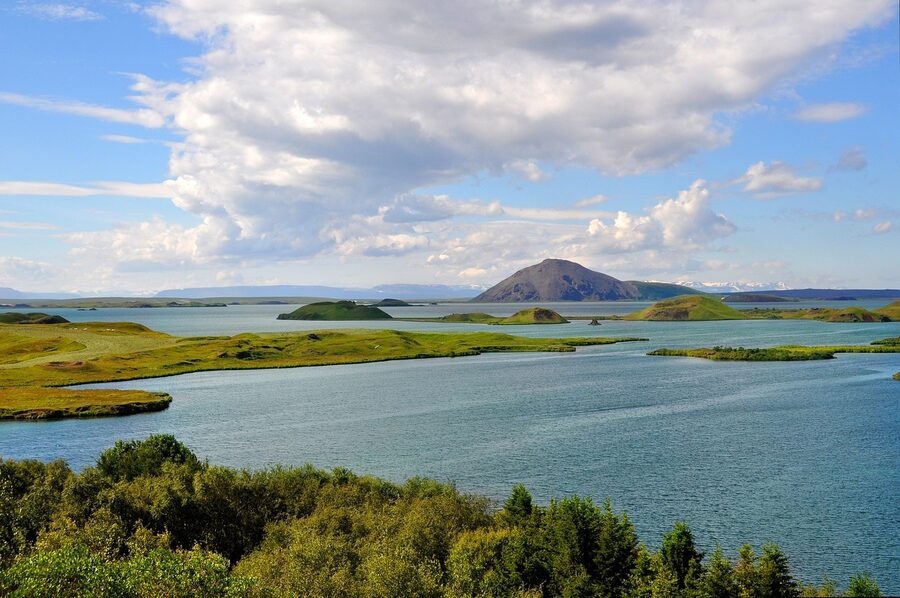
North Iceland base. Akureyri, the country’s second city, sits further north and arguably has slightly better aurora geometry, plus puts you within an hour of Lake Mývatn (the most-photographed aurora region in the country). The trade is a domestic flight from Reykjavik (~45 minutes) or a five-hour ring-road drive. Worth it for two-week-or-longer Iceland trips; impractical for a long weekend.
Snæfellsnes base. The peninsula north-west of Reykjavik, with the iconic Kirkjufell mountain. About a two-and-a-half hour drive from the capital. Smaller villages (Grundarfjörður, Stykkishólmur), genuinely dark night skies, and one of the country’s most photographed aurora foregrounds. The trade is fewer dining options and shorter winter daylight than the South Coast.
For a first-time Iceland aurora trip with three to five nights, the South Coast or a hybrid (one night Reykjavik, three nights Vík) gives the best combined chase-and-day-trip rhythm. If your wider Iceland calendar is locked, see when to travel for the full seasonality logic.

How to chase: the four shapes
The four practical chase strategies, with the trade-offs each carries:
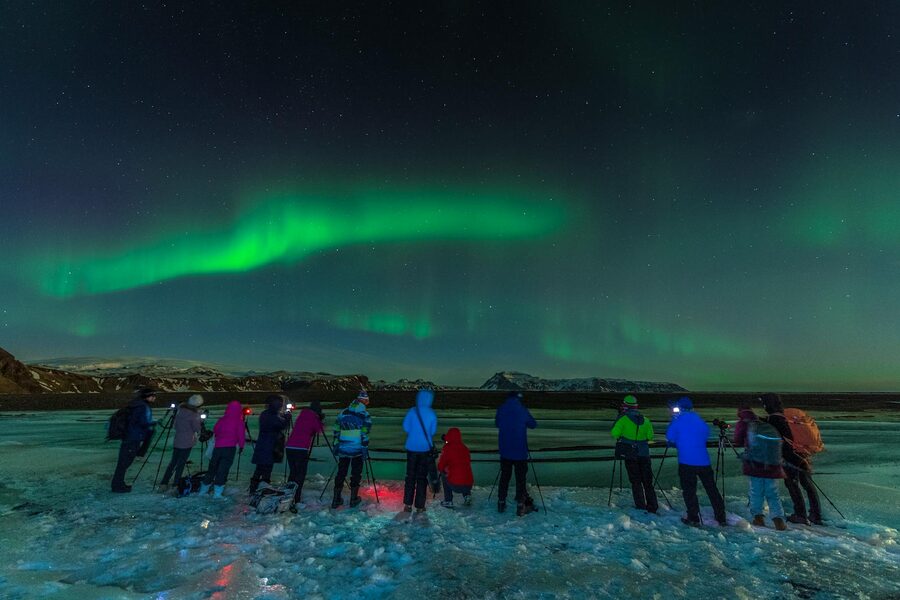
Coach tour from Reykjavik. The cheapest option (around USD 65-95 per person) and the most popular. Reykjavik Excursions, Gray Line, and a dozen smaller operators run nightly coach tours from October through April. The bus loads at 20:00 or 21:00 from central pickup points, drives until the guide locates dark sky and a clear forecast pocket, stops for an hour or two of viewing, then returns. Most reputable operators run a free-rebook policy if the aurora does not appear: Reykjavik Excursions, Gray Line, and Adventures.is all advertise versions of this (Adventures.is goes furthest, with a three-year retry window). The trade-off is the coach experience itself: 40 to 60 strangers, fixed timing, group-light discipline that is rarely as strict as solo photographers want.
Small-group / Super Jeep tour. The mid-tier (around USD 150-220 per person). Reykjavik Excursions runs a “Northern Lights Explorer” Super Jeep, and several smaller operators (Aurora Hunters, Fjallajeppar, Mountain Taxi) run 4×4-based small groups of 4 to 8. The advantage is mobility (a Super Jeep can chase clearer pockets the coach cannot reach) and a more personal pace. Same rebook conventions usually apply.
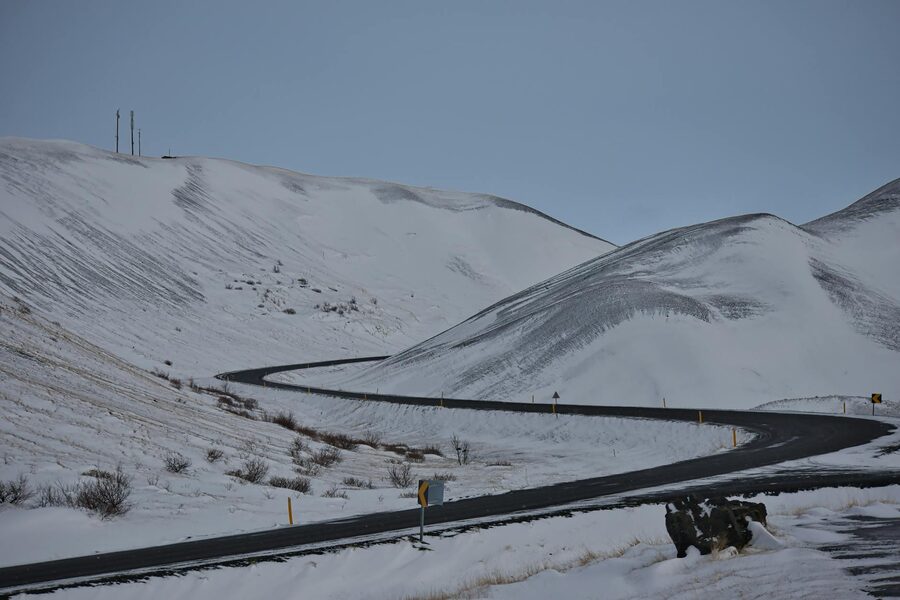
Self-drive aurora chase. The version most photographers prefer. Rent a 4WD (Hyundai Kona electric or Tucson, Toyota RAV4, Jeep Wrangler depending on the operator), get the aurora forecast on your phone, drive out of light pollution, find a turn-out, wait. Total cost is the rental (around USD 80-150 per day for the right vehicle) plus fuel; you set your own schedule. The trade is night-driving on Iceland’s winter roads, which is genuinely demanding even for confident drivers. Routes that are smooth in summer (Þingvellir, the Reykjanes peninsula) are workable in winter but require dipped headlights, slow speeds, and a careful reading of the road-conditions app at road.is.
Aurora boat cruise. Several operators run aurora boats from Reykjavik’s old harbour (Special Tours, Elding) and from harbours further north. Ninety minutes to three hours afloat, with the advantage of getting clear of city light pollution by water. The catch is that Reykjavik harbour itself has limited dark-sky escape (the city’s lights linger across the bay), so the boat tours work best on KP-4-plus nights when even partial darkness is enough. Best for travellers who would rather not drive.
The multi-night strategy
This is the part most aurora trips get wrong. Single-night aurora odds in Iceland over the dark months sit somewhere around 30 to 40 percent (cloud cover is the main blocker; aurora itself is present most nights at this latitude). Three nights of chasing gets you to roughly 65 to 75 percent. Five nights pushes it past 90 percent. Seven nights essentially guarantees you will see the lights at least once.
The implication: do not book a single aurora tour and call it a trip. Plan a minimum of three full nights in dark-sky territory, and accept that you will spend two of those three nights driving back to bed without seeing anything. The third night, when it works, justifies the previous two. This is the genuine cost of the trip; visitors who do not budget the time keep being surprised by it.
The nightly rhythm that experienced aurora travellers settle on: check the Met Office forecast on vedur.is at 17:00 (the cloud-cover and KP-index forecast updates throughout the day). If KP is 2 or higher and the cloud forecast shows a clear pocket within driving distance, prepare to chase. Eat early. Sleep early in the afternoon. Drive out at 21:00. Stay out until at least 01:00. Sleep late the next morning. Day-trip the country during the day. Repeat.
The off-season Iceland trade
Iceland’s aurora season coincides with the country’s wider tourism off-season. October through March is the trip you take if you want the country at its quietest, its hotel rates at their lowest, and its dramatic-weather winter version showing instead of the gentle-summer one. The wider seasonality logic is in when to travel; for aurora-specific trips the relevant trade is:
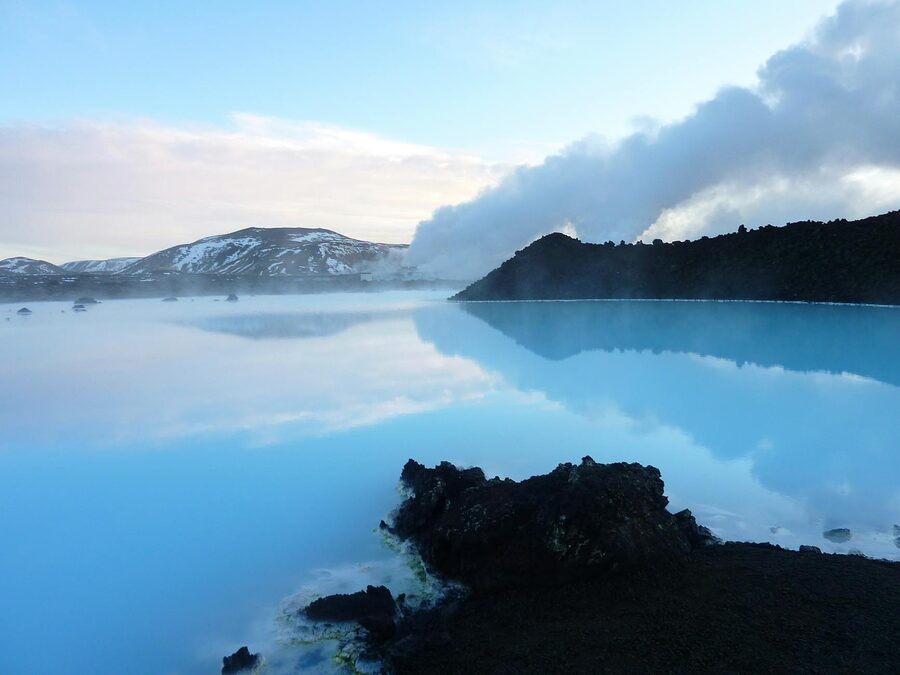
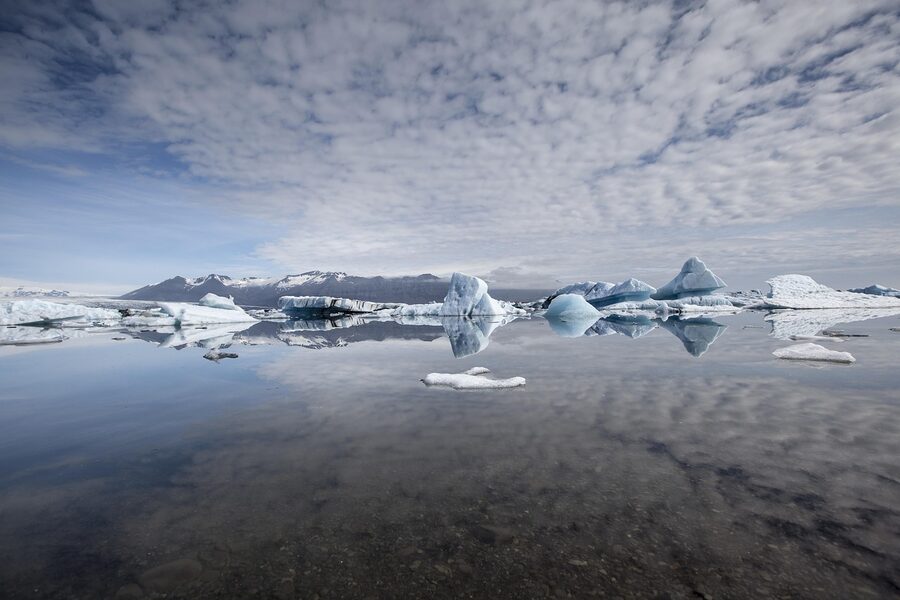
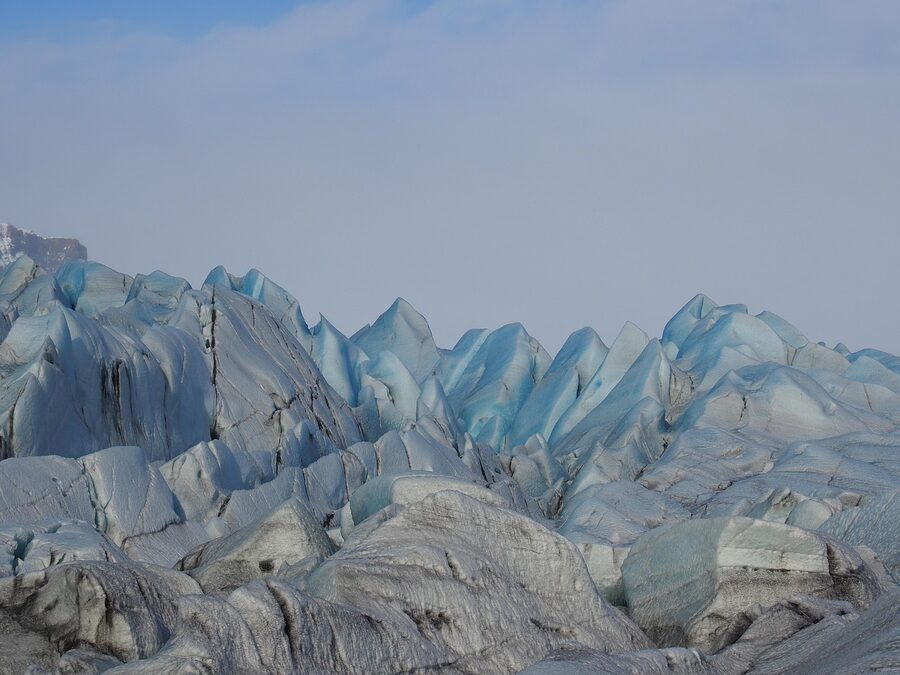
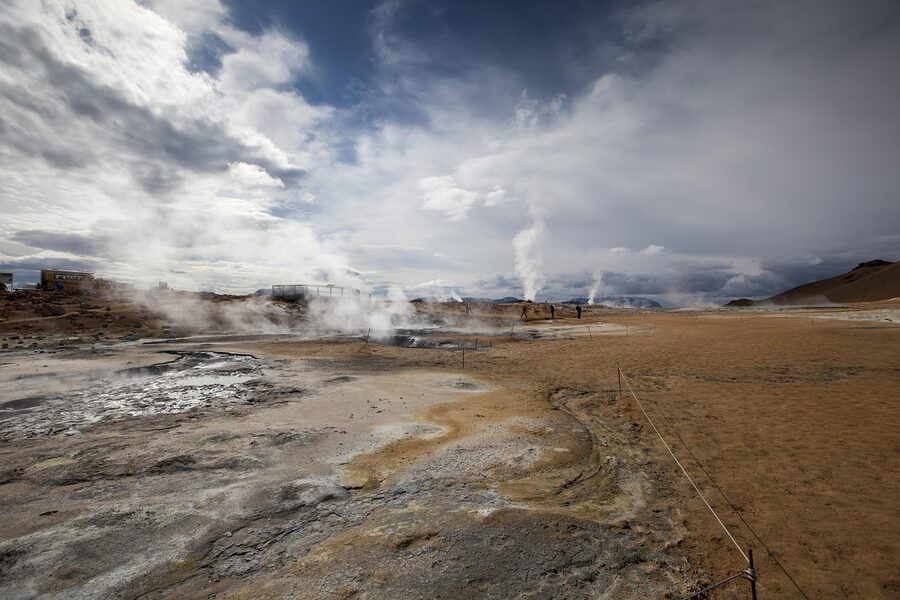
What you gain: long dark nights, steam rising off geothermal pools in subzero air, ice caves in the Vatnajökull glacier (December through March), the country’s roads largely empty of summer tourist coaches, hotel and rental-car rates 30 to 50 percent below summer peak.
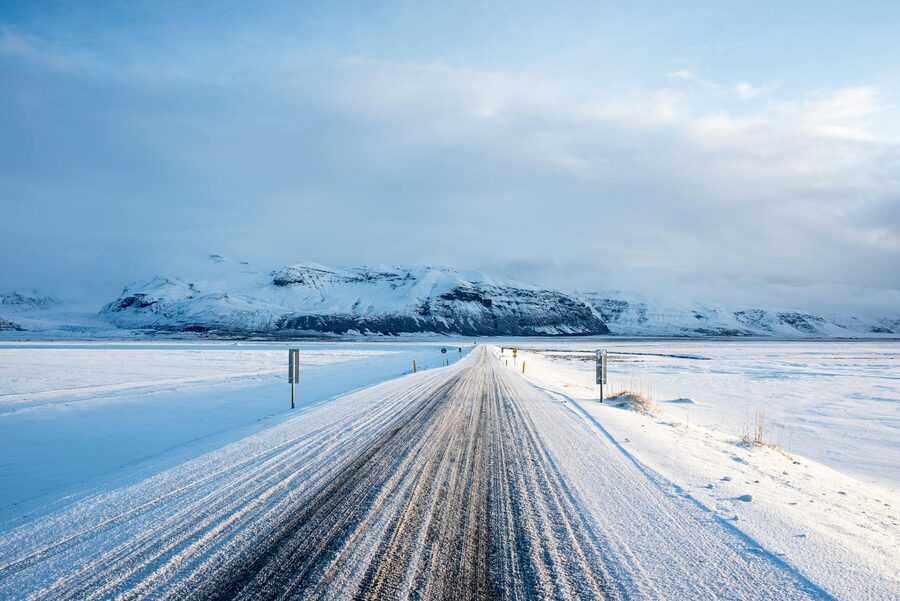
What you lose: the highland F-roads close from late September through to roughly mid-June and large parts of the country’s interior are inaccessible. Daylight is short (December’s four hours of usable light limits how much you can do during the day). Some smaller hotels and restaurants outside Reykjavik close for the off-season. Driving conditions can shift to “actually dangerous” within an hour during a winter storm.
The off-season Iceland is a different country than the summer one. Aurora travellers either accept that and enjoy the version they get, or they go in May for the long-light landscape trip and skip the lights entirely. Trying to do both in one trip is the most common planning mistake.
Reading the Met Office forecast
The Icelandic Met Office (vedur.is) is the only forecast worth checking in detail. It updates roughly every three hours and stacks two layers on one map: a 0-9 aurora-activity scale and a cloud-cover forecast in green (cloudy) and white (clear). The traveller’s job is to read both together. A KP-7 night with a green map gives you nothing; a KP-2 night with a white pocket near Þingvellir gives you a real chance.
The practical rhythm: open the page at 17:00, look for a clear pocket within driving distance for the 21:00 to 02:00 window, decide whether to chase. Do not commit before that. The forecast at 09:00 is too early to be useful; the country’s weather changes too fast through the day. The same applies the other way: a forecast that looks bad at 09:00 can clear by 17:00, and chasing trips that get cancelled in the morning sometimes turn out to be the night the lights show.
The auroral oval visualisation on the NOAA SWPC site (swpc.noaa.gov/products/aurora-30-minute-forecast) is a useful supplementary check, especially for understanding how the oval shifts during a geomagnetic storm. But for Iceland-specific planning, vedur.is is the source of truth because it ties the geomagnetic forecast to local cloud cover. The mobile-friendly version at en.vedur.is/weather/forecasts/aurora/ is what most experienced visitors keep open in a browser tab on their last drive of the evening.
What to wear
The temperature at a viewing location is usually -5 to -15 Celsius, and the wind is the variable that matters more than the temperature itself. The Icelandic phrase “the wind is the weather” applies. Standing still for ninety minutes in a -7 evening with a 25 km/h wind is colder than walking in a -15 evening without one.
The five layers that work:
- Merino base layer (top and bottom)
- Mid-layer fleece or wool jumper
- Insulated mid-jacket (synthetic or down)
- Windproof outer shell with hood
- Waterproof outer pants over thermal base
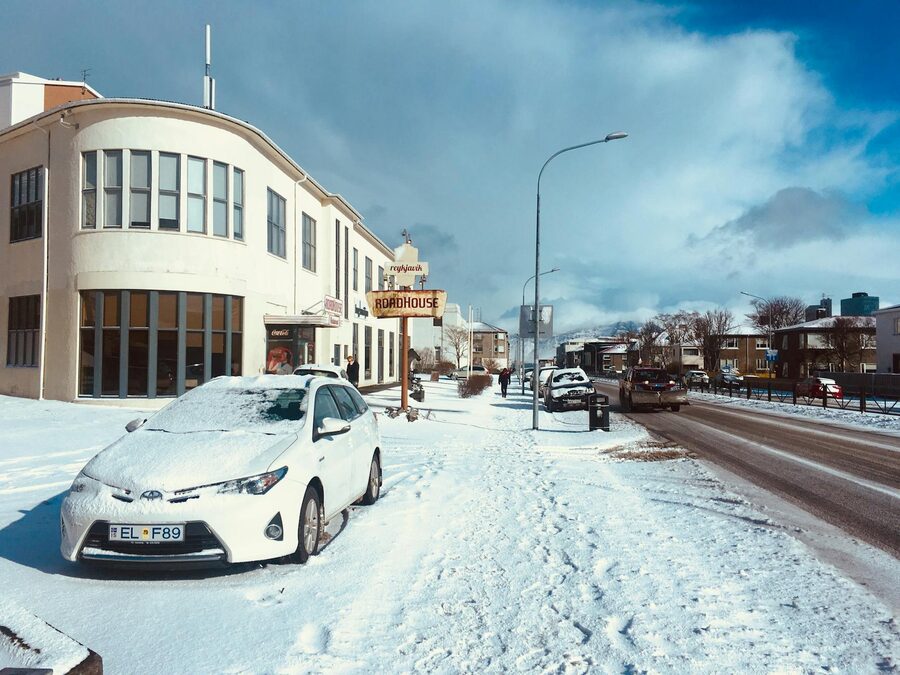
Plus: warm boots (rated to at least -10), wool socks, two hats (a beanie under the jacket hood), insulated mittens (warmer than gloves), and hand warmers in a pocket. Most coach tours and Super Jeep operators include thermal coveralls in the price; verify before booking. The self-drive version of the trip requires you to have your own kit. Buy or rent in Reykjavik before leaving the city.
Photography, briefly
Aurora photography is its own skill. The short version for visitors who want a phone shot rather than a tripod-and-prime-lens shot:
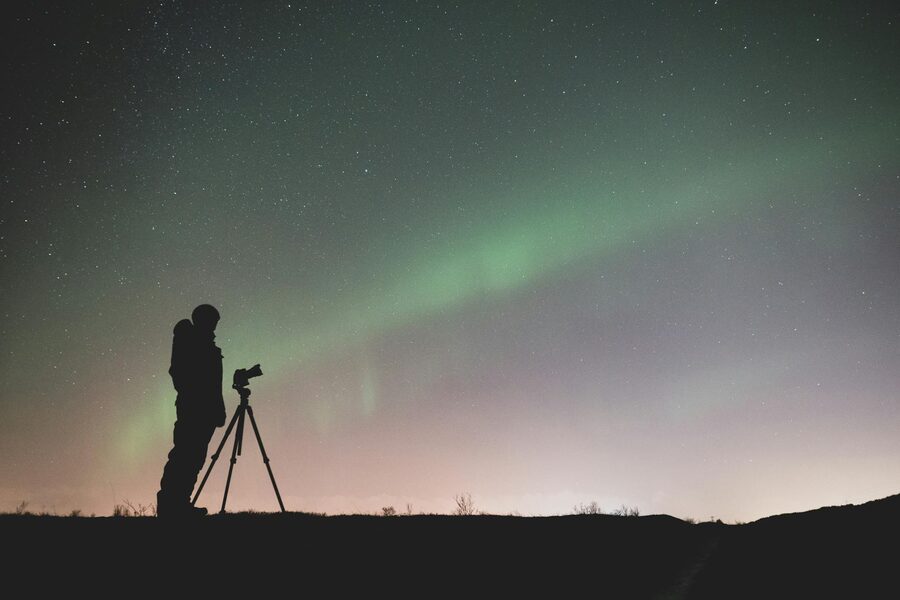
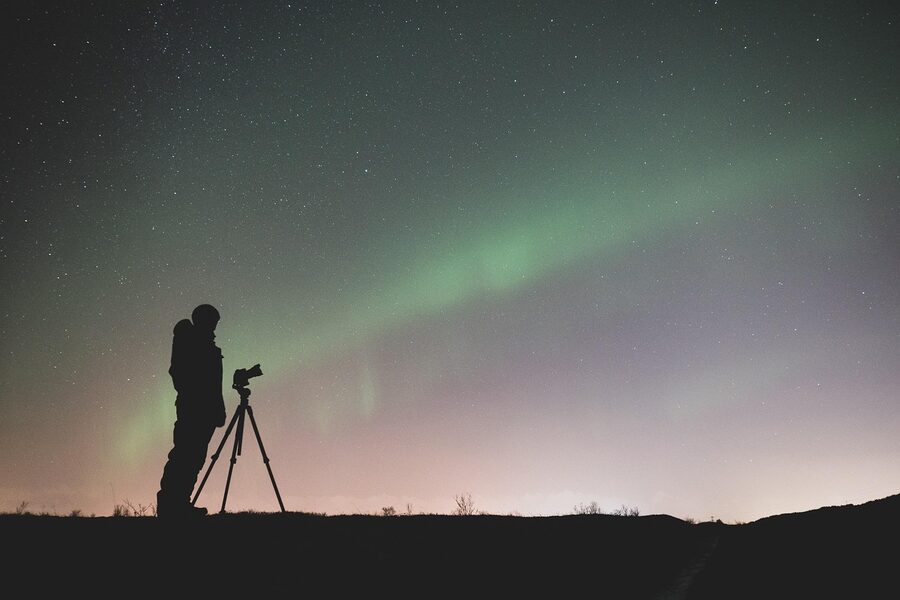
Modern phones (iPhone 13 Pro and later, Pixel 7 and later, Galaxy S22 and later) have night mode that captures aurora reasonably well from a steady hand. Hold against a fence post or a tripod-by-balance-on-rock. ISO 1600 to 3200, exposure 3 to 10 seconds depending on aurora brightness. Switch off the flash. Tap to focus on infinity (or the distant horizon if your phone gives you the option).
For DSLRs and mirrorless cameras: tripod (essential), wide aperture lens (f/2.8 or wider), ISO 1600 to 6400, shutter 5 to 20 seconds. Manual focus to infinity (autofocus does not work in the dark). Bring two batteries; cold drains them fast and the spare goes inside your jacket pocket against your body to stay warm.
If photography is the point of the trip, several operators (most established is Iceland Photo Tours / iceland-photo-tours.com) run dedicated photographer-led aurora workshops, with three to seven nights, named guides, and ratios that allow proper instruction. Around USD 1,800 to 4,000 for the workshop versions. Worth it if you came specifically to leave with portfolio shots; not worth it if a phone snapshot is enough.
Common mistakes
Booking a single coach tour and treating that as the aurora plan. Single-night odds are roughly one in three. Plan for three nights minimum.
Booking a tour for night one of the trip. You are jet-lagged, the weather has not settled, your gear is not unpacked. Hold the first night for adjustment and book aurora chases from night two onward.
Trusting “guarantee” claims. No operator can guarantee the aurora. Operators who claim guarantees are using a definition of guarantee that means “we’ll take you out trying”; the responsible ones offer rebooks instead.
Going in May. Aurora is technically present year-round, but Iceland’s late-spring twilight does not let you see it. May trips are landscape trips, not aurora trips.
Skipping the Met Office and checking only commercial aurora apps. Vedur.is is the authoritative local source for both KP forecast and cloud cover. The commercial apps draw from the same data with worse interfaces.
Chasing on the wrong night. A KP-5 forecast with 100 percent cloud cover will give you nothing. A KP-2 forecast with clear skies in a particular pocket will give you a display. Cloud cover is the variable that matters; the KP-index gives you the upper bound.
Driving out without checking road conditions. Iceland’s road conditions can shift in an hour. The road.is site (Vegagerðin, the road authority) shows real-time conditions for every road in the country; the night before any drive, check it.
If you would rather have an aurora trip planned around your specific dates and weather windows by someone who handles the moving pieces, a tailor-made tour from a specialist Iceland operator is one approach; the chase strategy still belongs to the visitor.
What it costs in 2026
Rough budget for two people on a five-night aurora trip from Reykjavik, Booking.com / Reykjavik Excursions / Hertz pricing as of 2026:
| Style | Per couple total (USD) | What that buys |
|---|---|---|
| Budget | $2,200–3,200 | Hostel privates, two coach aurora tours, one self-drive day, supermarket lunches, modest dinners |
| Mid-range | $3,800–5,500 | 3-star hotels, two small-group aurora tours, rental car for the week, restaurant dinners |
| Comfort | $6,500–10,000+ | 4-star or boutique hotels (Reykjavik + South Coast), private aurora chase, photographer workshop, restaurant dinners, ice-cave day |
The five biggest variables: time of year (November and February are 25 percent cheaper than December-January), how many aurora tours you book (the second and third tour add real cost), whether you self-drive (rental car for a week runs USD 600-1,000), the Reykjavik vs South Coast hotel split, and how many sit-down dinners you do. Iceland is meaningfully expensive; budget the upper end of your tier and consider it tightly bounded.
The view
A real aurora display is not the still photograph. The lights move. They pulse, drift, sheet across the sky from horizon to horizon, sometimes in seconds. A strong display has a kinetic quality that no photograph captures and no description anticipates. Visitors who have only seen the still images underestimate how live the show is in person.
The first time I saw a real Kp-5 display from a hillside outside Vík, the lights moved like curtains in wind, with a sound that wasn’t quite there but felt like it should be. Locals call this the aurora’s “song”, a perceptual artefact rather than an actual sound, but the brain insists on it anyway. That night, two coaches of tourists were standing in the same pulldown twenty metres from us, all silent, all looking up. None of us said anything for nearly an hour.
Iceland’s aurora is one of the great experiences in travel. It is also unreliable, weather-dependent, and impossible to schedule. The trip that works is the one where you accept those terms before booking, give yourself the nights you need, and treat the whole week as the chance, not any single evening as the show. Done that way, the lights are almost certain to find you. Done any other way, they probably will not.

.jpg)
